Hand-Knotted Wool Rugs: A Buyer’s Guide
A hand-knotted wool rug is one of the more considered purchases you can make for a living room. The method is slow: each knot is tied by hand around the foundation. The fiber — when it is listed as wool, or honestly as a wool blend — gives the pile a different hand and rebound than a synthetic indoor rug. This guide shows you how to judge what is actually on the product page, how to choose a size, and how to care for the rug once it is in the room, without invented knot counts, lifespans or reviews.
Part of our Home Buying Guides. For a wider comparison with tufted, flatweave and power-loomed rugs, see handmade vs machine-made rugs. For patio fibers, see outdoor rug materials.
What Hand-Knotted Actually Means
Hand-knotted means the pile is formed by knots tied around the warp, row after row. It is not a marketing synonym for “handmade,” and it is not the same as hand-tufted. When you turn a true hand-knotted rug over, you can usually follow the pattern on the back, because there is no cloth cover hiding a punched pile. Edges and fringe, when they are part of the rug’s own warp, look grown from the structure rather than sewn on as an afterthought — though you should still confirm what the photos show, because finishes vary.
This construction is why people shop for hand-knotted rugs for a living room rather than only for a decorative corner. The rug is meant to be walked on. That does not make every knotted rug identical. Tightness of the work, evenness of the rows, the fiber, and the thickness all differ from piece to piece. Vaeny titles use “Hand Knotted” when that is the listed method, so start there, then confirm the rest of the catalog fields.
Wool versus Wool Blend
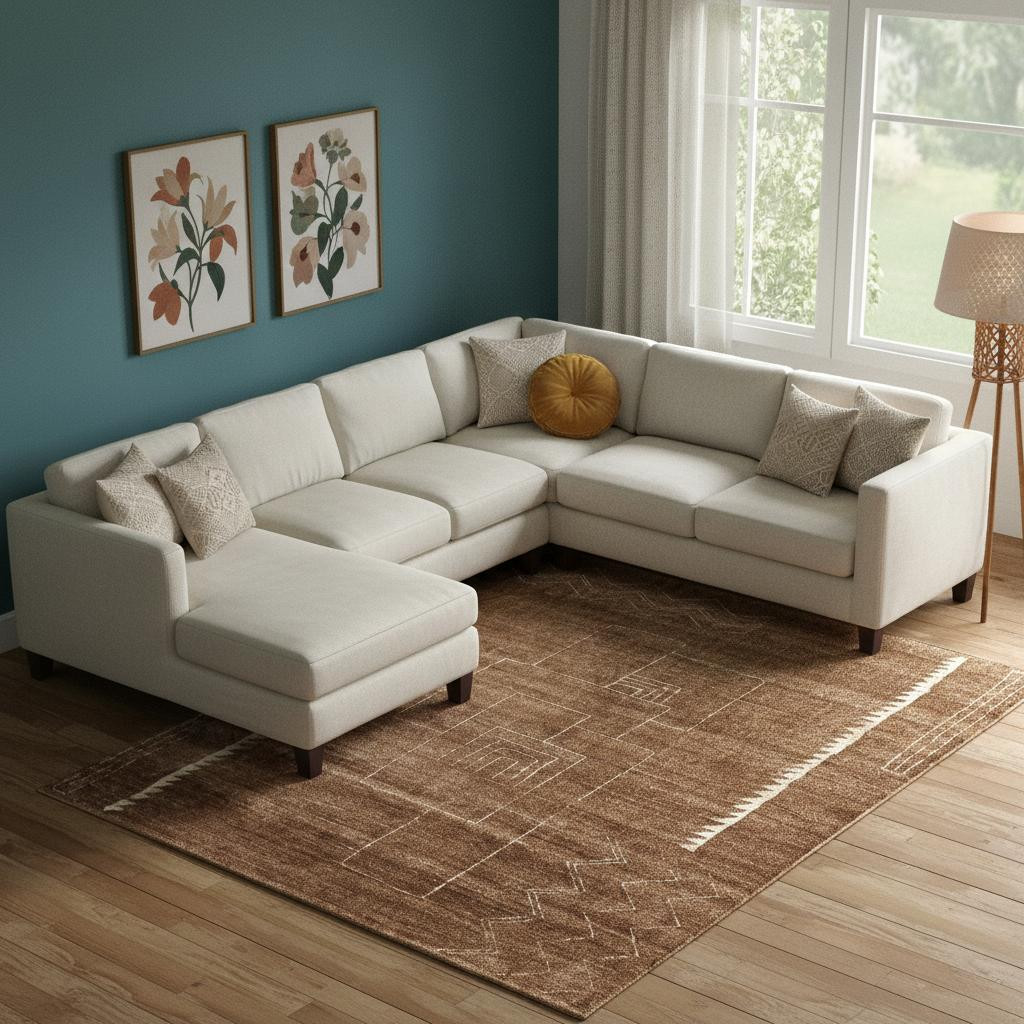
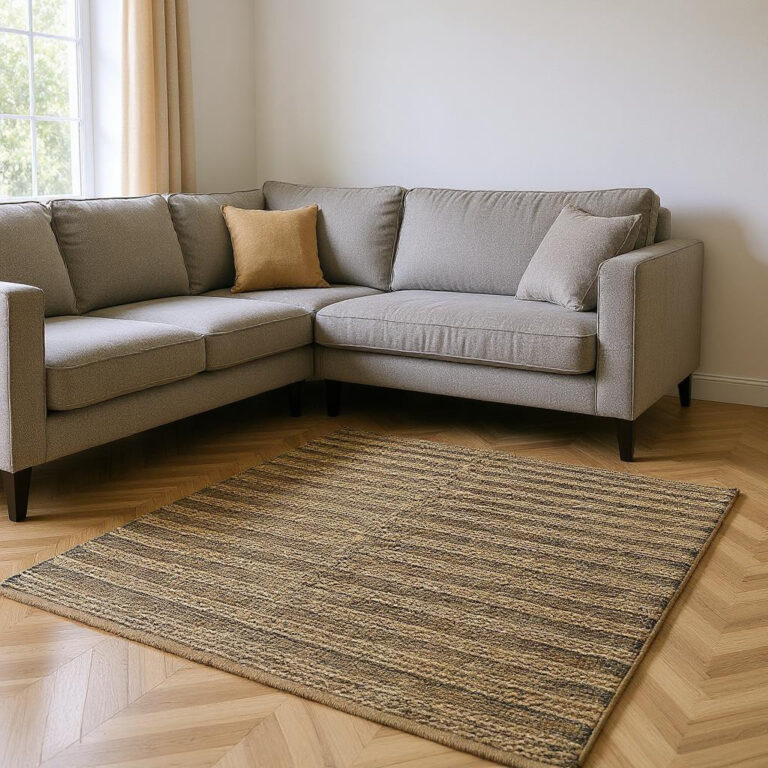
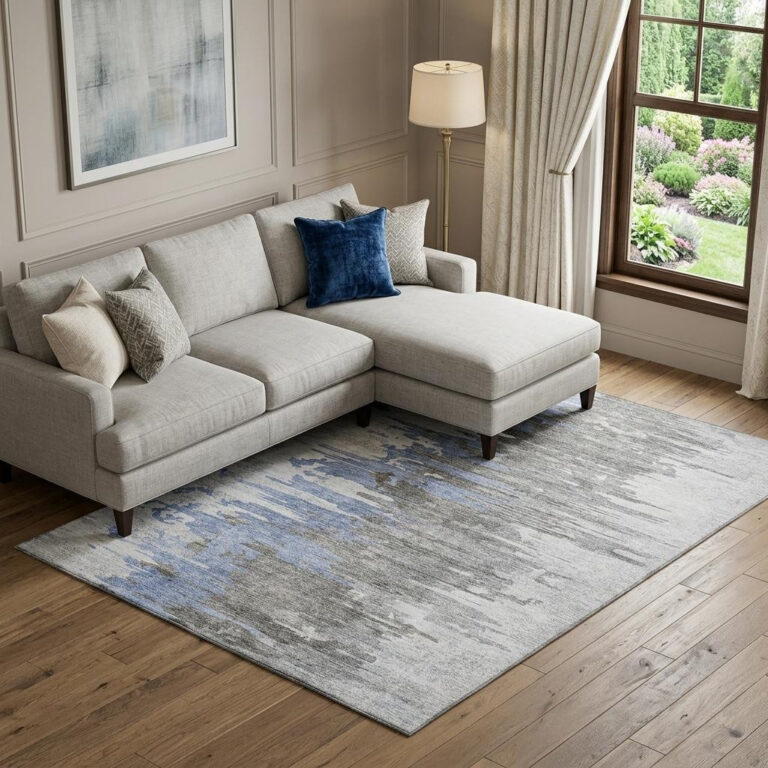
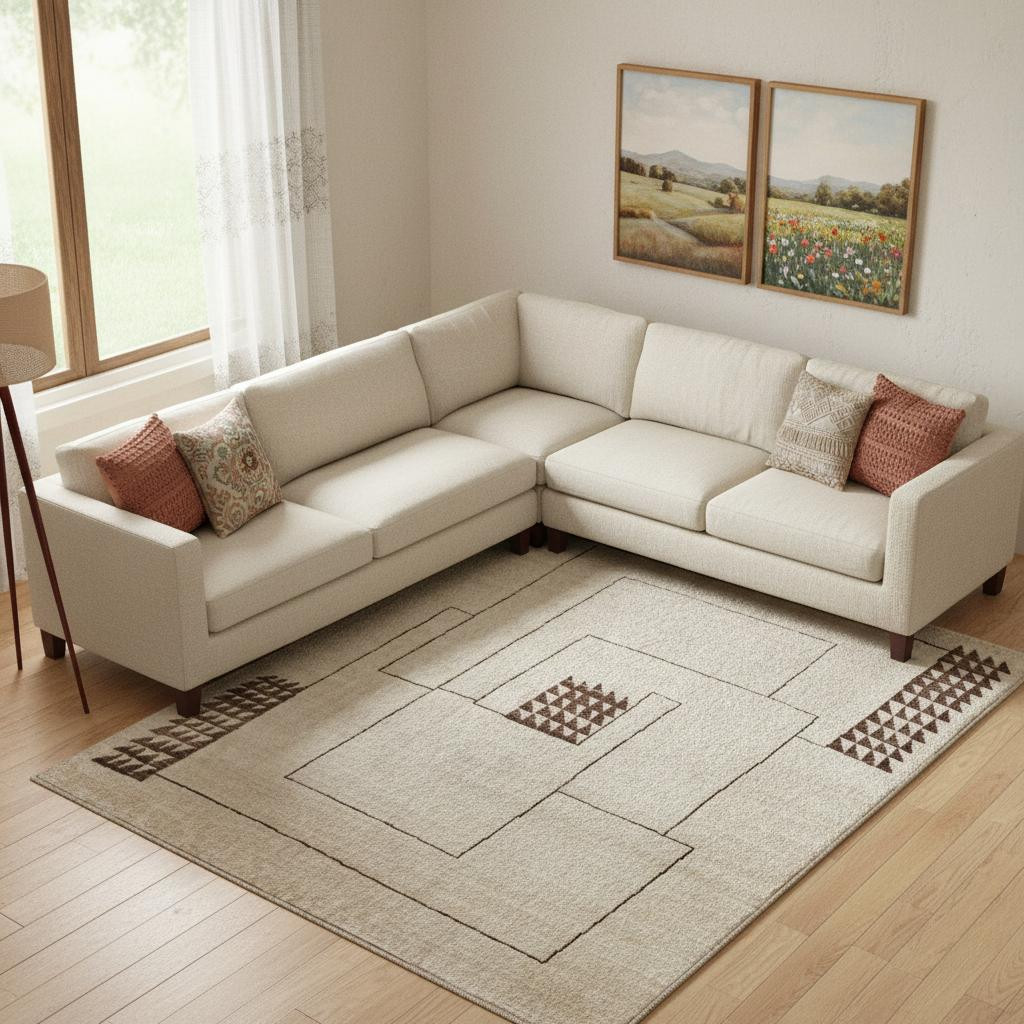
Wool is a traditional fiber for knotted rugs because it has natural spring, takes dye well, and hides a certain amount of everyday wear. On Vaeny product pages the material is listed plainly. Some hand-knotted rugs are listed as wool. The 8×10 ivory and brown abstract rug at the top of this guide, and the 8×10 brown and ivory distressed abstract rug above, are both listed as wool.
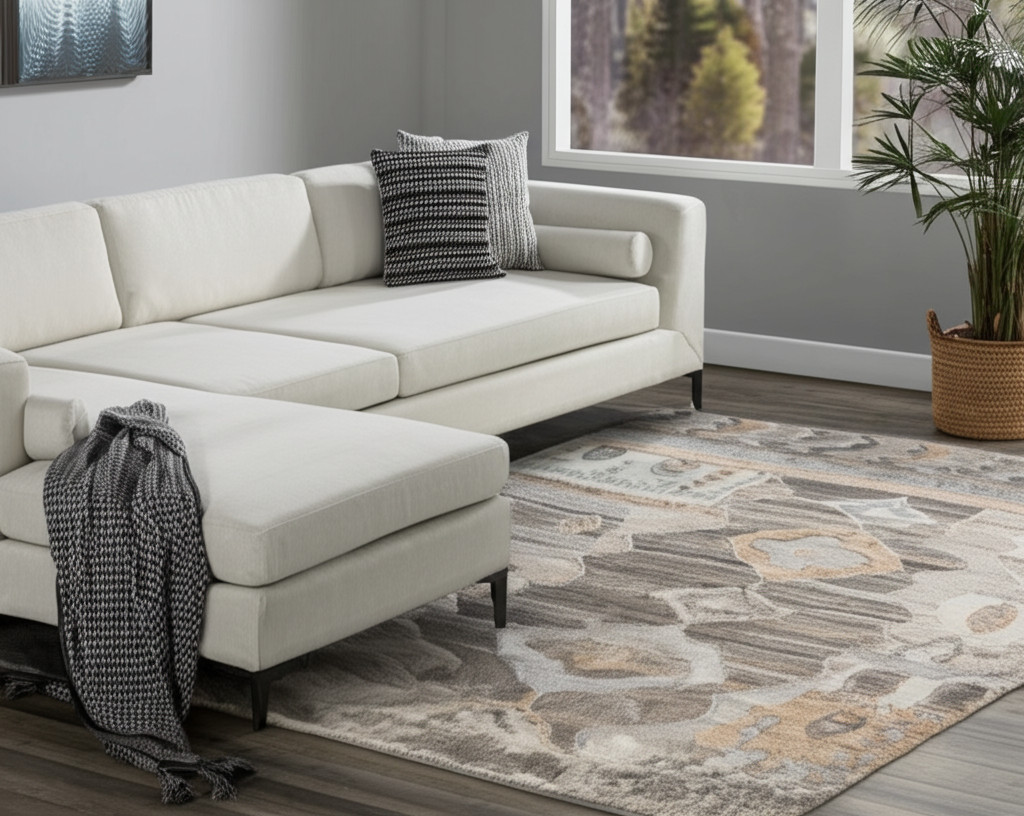
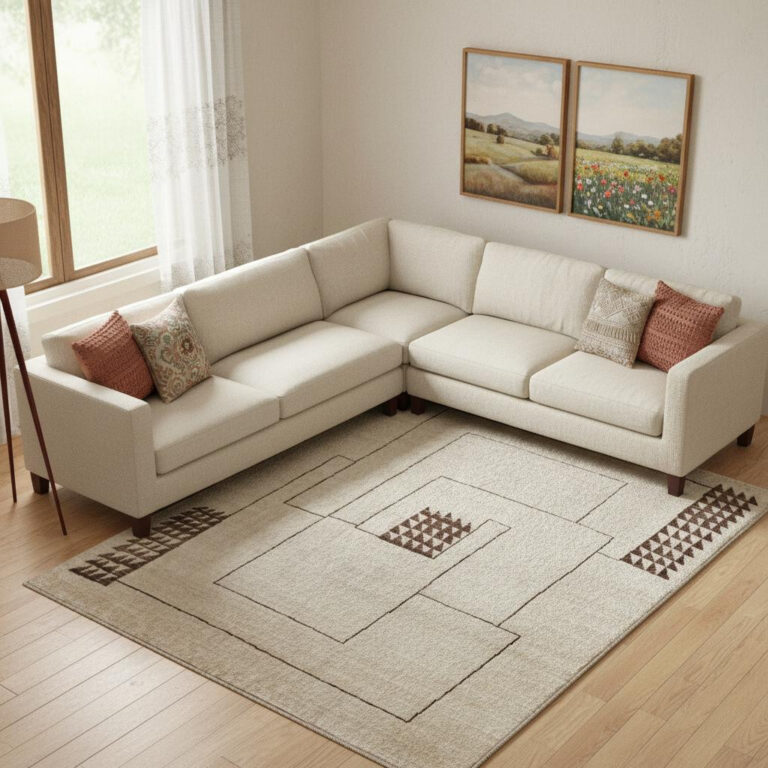
Other hand-knotted rugs are listed as a wool blend. The 8×12 ivory, gray and orange Moroccan rug above, the 9×12 blue-green-and-yellow geometric rug later in this guide, and the 10×14 blue and ivory geometric rug are all listed as wool blend. A blend still includes wool, but it is not the same catalog entry as wool. We will not invent a wool percentage that the page does not give. If you specifically want wool, filter with your eyes on the material field and mention that preference in the quote request so we confirm the listing before you pay.
Short descriptions on many of these pieces mention a canvas back that finishes the rug. That is a finish note, not a change of construction: the knots are still how the pile is built. If a back looks fully covered in a photo and you want to see the knot structure, ask us for any additional images we have when you request a quote.
How to Judge Knot Quality
Knot quality is real, but it is easy to fake with a number. We do not publish knots per square inch on these listings, so this guide will not assign one. Instead, use evidence you can actually see or read:
- The title and method. It should say hand-knotted. If it says hand-tufted or power loom, you are in a different construction, even if the pattern looks “Oriental” or “Moroccan.”
- Photos of the face and, when available, the back or corner. Look for even rows, a pattern that meets the edge cleanly, and a pile that looks cut to a consistent height. Slight variation is normal in handmade work. Gaping rows, badly skewed medallions, or a cloth back with no knot structure are reasons to slow down and ask.
- The listed material. Wool and wool blend should match what you think you are buying.
- The listed thickness. Dimensions on these products include a depth measurement (for the wool 8×10 examples above, the catalog lists a depth of 0.4 inch). Thickness is not a knot count, but it does tell you whether the rug is a low, close pile or something thicker.
- Your quote. If knot density or country of origin is not on the page, we will not invent it. We can repeat what is catalogued and, where we have more maker notes, include those in writing.
A distressed or abstract hand-knotted rug is not automatically lower quality than a crisp geometric one. Distressing can be part of the design. Judge the evenness of the work, not whether the color looks time-worn.
Pile Height and the Listed Thickness
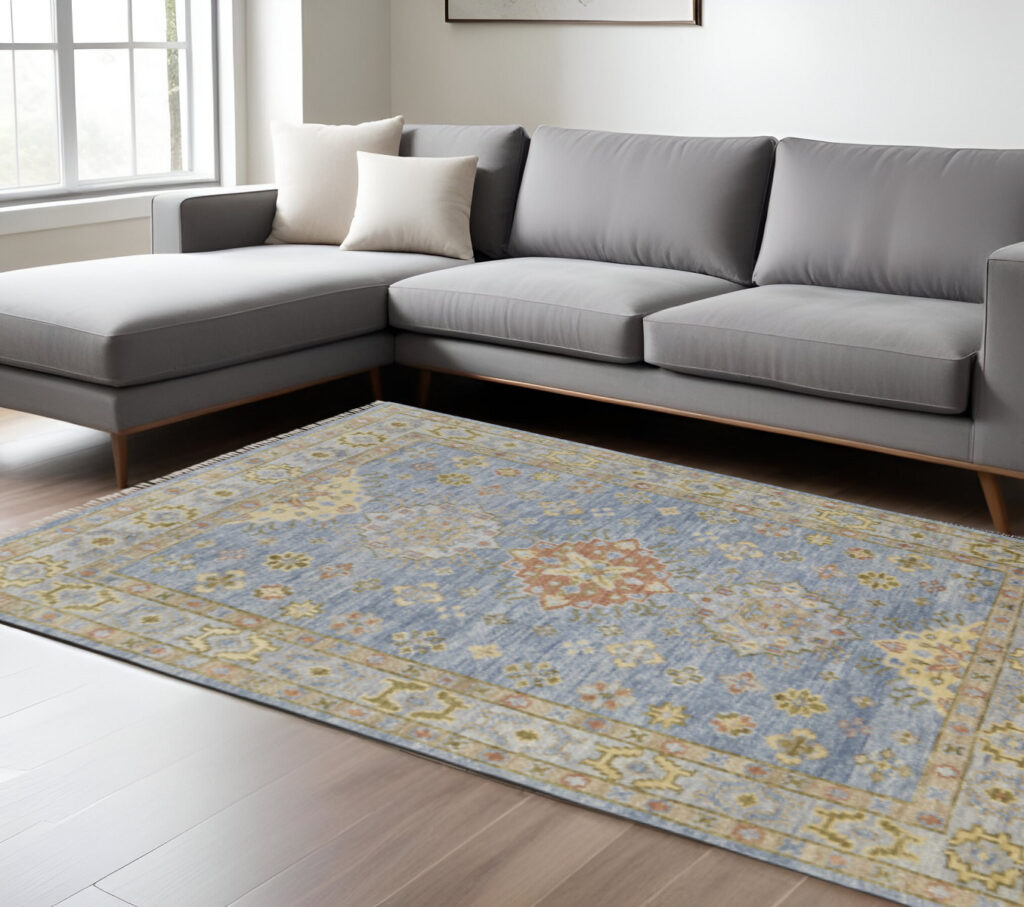
Hand-knotted living-room rugs are often a low to medium pile, which is practical around doors and under front furniture legs. The catalog depth gives you a number to compare. The wool-blend 9×12 geometric rug above lists a 0.4 inch depth; some distressed abstract knotted pieces list about 0.31 inch. Those figures come from the product dimensions, not from a tape we ran in a studio for this article.
A lower pile is usually easier to vacuum and easier to place under a door swing. A slightly thicker pile can feel softer but may hold more grit if it is not cleaned. Neither number replaces a rug pad or a sensible vacuum setting. If door clearance is tight, include the door gap in your quote request and we will help you compare listed thicknesses from the pages you shortlist.
Choosing a Size for the Living Room
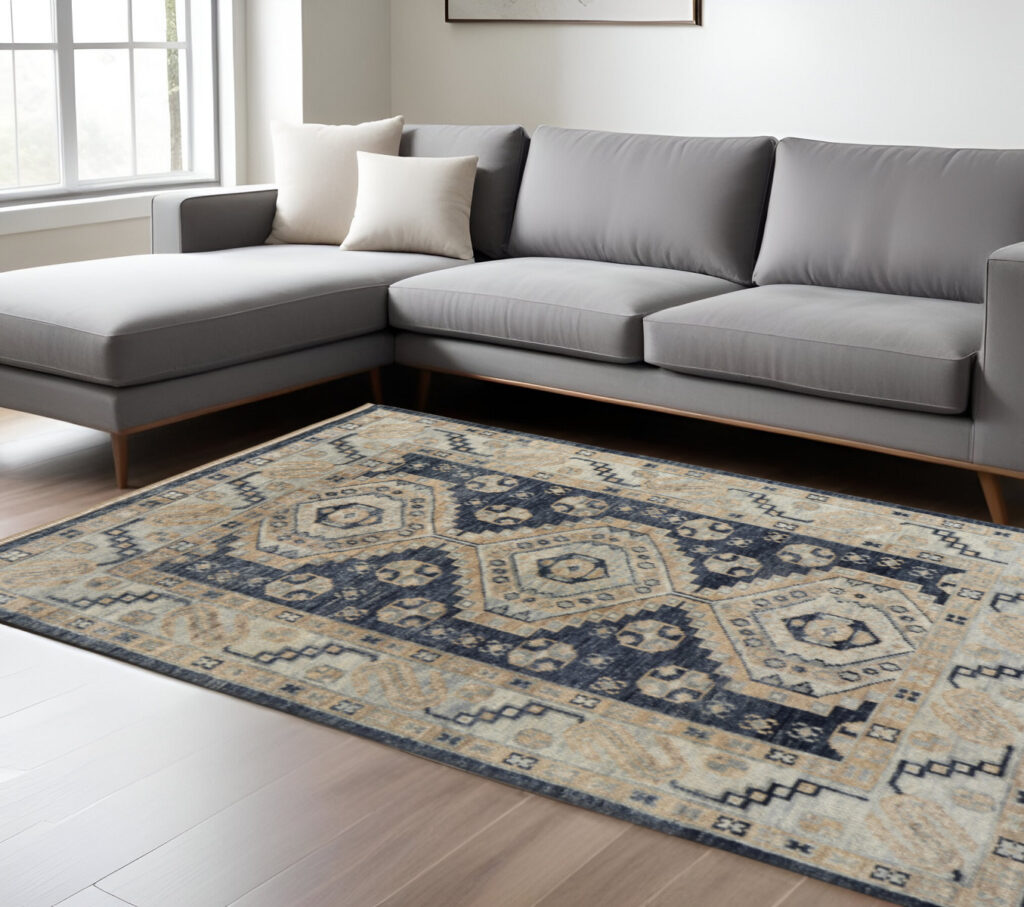
Construction does not change the sizing rules. An 8×10 is still the most common starting size when a sofa and chairs have their front legs on the rug. A 9×12 is the usual step up. A 10×14, such as the blue and ivory geometric rug above, is for a larger room or a layout where you want more of the furniture fully on the rug. An 8×12 can work in a slightly longer room or a defined seating hall.
Measure the room, then the furniture. Leave a border of floor around the rug — often about 8 to 18 inches, depending on the size of the room — and keep walkways clear. The charts and layout sketches in what size rug for a living room apply directly here. If the hand-knotted rug will sit under a dining table, use rug size under a dining table instead, because chairs have to stay on the rug when they are pulled out.
| Living-room situation | Size many shoppers start with | Example in this guide |
|---|---|---|
| Standard sofa and chairs, front legs on the rug | 8′ × 10′ | Ivory and brown wool abstract; brown and ivory wool distressed |
| Larger room or more of the furniture on the rug | 9′ × 12′ | Blue, green and yellow geometric (wool blend) |
| Longer seating wall or a slightly elongated room | 8′ × 12′ | Ivory, gray and orange Moroccan (wool blend) |
| Open or large room, all-legs-on layout | 10′ × 14′ or similar | Blue and ivory geometric (wool blend) |
Style Notes Without the Hype
Abstract, distressed, geometric and Moroccan-inspired patterns all appear in the current hand-knotted assortment. A style word in a title describes the look, not a historic certificate. We will not claim that a rug is a regional antique, a tribal authentic, or a museum grade unless that documentation is actually on the product. What you can do is choose a pattern that sits comfortably with your sofa, then confirm the size and the material.
Quiet abstracts and ivories hide less furniture-leg shadow but show fewer crumbs than a very pale, open field in a busy house. Geometrics can frame a seating group clearly. If you are pairing the rug with a sectional, take the sectional’s shape to the size guide first, then come back to pattern.
Care for Hand-Knotted Wool Rugs
Good care is ordinary and regular, not elaborate. Vacuum the face on a gentle setting and avoid a beater bar that can chew the pile, especially on a distressed or lower-cut rug. Work in the direction of the pile when you can. Attend to spills quickly: blot with a clean, dry cloth, do not rub, and avoid flooding the foundation with water or strong cleaners. For a deeper clean, use a professional who regularly handles handmade wool rugs rather than a generic steam treatment meant for wall-to-wall synthetic carpet.
Wool can mark if it stays wet, and a blend should be treated with the same caution unless the product page gives a different care path. We will not invent a washing-machine method for a hand-knotted rug. If a specific listing ever includes special care language, that language should be followed and can be copied onto your quote.
Pads, Rotation and Sun
A rug pad cut slightly smaller than the rug helps with grip, takes some of the wear, and is kinder to hard floors. Choose a pad meant for indoor hard-floor or carpet use, depending on what is underneath. Rotate the rug from time to time so sun and foot traffic do not land on the same path all year. Direct, strong sun can fade any dyed textile; a sheer curtain or a periodic rotation is more honest than a promise that color cannot change.
Store the rug rolled, never sharply folded, if you take it up. Keep it dry. If something is damaged in delivery, follow the inspection notes on our shipping page and write to us the same day with photos.
Shopping Hand-Knotted Rugs at Vaeny
Browse the hand-knotted rugs collection, and use handmade rugs if you are still comparing tufted or flatweave options. When a piece looks right, request a personal written quote. There is no payment on the website. The quote confirms the rug, the catalog material (wool or wool blend), the delivery method and the lead time. Shipping to the contiguous United States is free.
Include your room measurements, the layout you want (front legs on or all legs on), and whether you need a pad. If you are deciding between wool and a wool blend, send both product links. We will answer from the listings and any maker notes we have, not from invented specifications.
Frequently Asked Questions
Are hand-knotted wool rugs worth it for a living room?
They can be, if you want a hand-tied construction and a wool or wool-blend pile for a room you use every day. “Worth it” depends on size, the listed material, and how long you plan to keep the rug. Compare the listing carefully and use a written quote rather than a photo alone.
How can I tell wool from a wool blend?
Read the material field on the product page. Some hand-knotted rugs at Vaeny are listed as wool; others as wool blend. If it is not listed, we will not guess.
Do you list knots per square inch?
Not on the product pages used for this guide. Use photos, the listed thickness, the stated construction, and questions on your quote instead of a number we do not have.
What size hand-knotted rug should I buy for a sectional?
Many sectionals need a 9×12 or larger so both sides of the seating can sit at least partly on the rug. Measure first and use the living-room size guide.
Can I put a hand-knotted wool rug in a dining room?
Yes, if the size keeps the chairs on the rug when they are pulled out and you are prepared to clean crumbs promptly. A lower pile is usually easier around chairs. See the dining-table size guide for the clearance rule.
Related guides
- Persian and Oriental Rugs: A Buyer’s Guide
- Handmade vs Machine-Made Rugs
- Outdoor Rug Materials: How to Choose a Patio Rug That Lasts
- What Size Rug for a Living Room
- Rug Size Under a Dining Table
- All Home Buying Guides
Ready to compare options? Browse hand-knotted rugs or handmade rugs.