Handmade vs Machine-Made Rugs: Knotted, Tufted and Flatweave
Two rugs can look similar in a photo and still be built in completely different ways. One may be tied by hand, one punched through a cloth backing, one woven flat, and one woven on a power loom. Those methods change how a rug feels underfoot, how clearly the pattern shows on the back, how you care for it, and how long you should expect it to be a daily-use piece in a living room.
Part of our Home Buying Guides. This guide compares handmade vs machine-made rugs, then walks through hand-knotted, hand-tufted and flatweave constructions so you can read a product page with more confidence before you request a quote.
Handmade vs Machine-Made Rugs
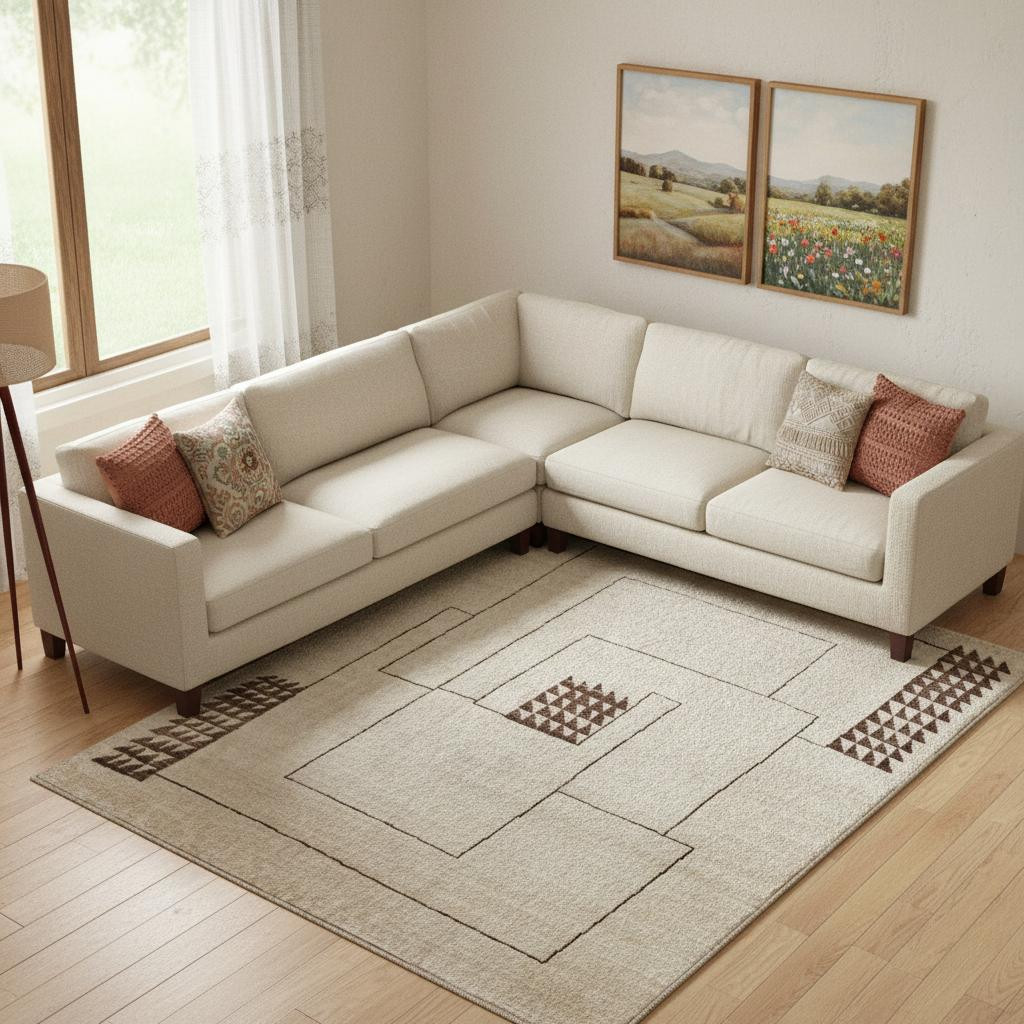
Handmade is a group of methods, not a single look. A weaver or tufter is directly involved in forming the pile or the fabric. The three handmade methods you will see most often at Vaeny are hand-knotted, hand-tufted and flatweave. Machine-made rugs — often described as power-loomed — are woven on mechanical looms. The pattern and pile are more uniform, and the fiber is very often a synthetic such as polypropylene, which is listed on the product page when that is the case.
Neither family is automatically “better.” A hand-knotted wool rug is a different object from an 8×10 power-loomed polypropylene area rug. One is usually chosen as a longer-term living-room piece; the other is often chosen for a clear size, a consistent pattern and easier everyday cleanup. The honest question is which construction matches how you use the room, how long you want to keep the rug, and which material is actually listed for the piece you are considering.
It also helps to keep fiber and construction separate. Handmade does not always mean wool. Our handmade collection includes wool, wool-blend and jute pieces. Machine-made does not always mean “outdoor,” and an indoor power-loomed rug should not be treated as a patio rug unless the product is also listed as indoor/outdoor. If you need a rug for a covered or open patio, start in outdoor rugs and see outdoor rug materials.
How to Tell Them Apart
You can learn a lot before a rug arrives, as long as you use the product title, the material field, the photos and any note about the backing. Here is what to look for:
- The title. Vaeny titles usually name the method when it is known: “Hand Knotted,” “Hand Tufted,” “Flatweave,” or “Power Loom.” Treat those words as the construction, not as decoration.
- The back. On a hand-knotted rug, the pattern is typically visible on the back, because the knots wrap the foundation. A hand-tufted rug often has a cloth back (many of our tufted examples note a cotton back) that covers the work. A power-loomed rug looks regular on both sides, with a machine-even structure.
- The backing note in the short description. You may see “a cotton back,” “a canvas back,” “a jute back,” or no extra backing on a flatweave. That is useful evidence, not a minor detail.
- The material line. Wool, wool blend, jute, polypropylene and polyester are not interchangeable. We only describe a specific rug as wool when the catalog lists wool.
- The edge and fringe. On many hand-knotted rugs, fringe is the end of the warp, not a sewn-on trim. Tufted and machine-made rugs more often have applied fringe or a bound edge. Use photos rather than assuming.
If two photos still leave you unsure, send us the product links in your quote request and ask us to confirm construction and material as they are listed. We would rather repeat the catalog than guess.
Hand-Knotted Rugs
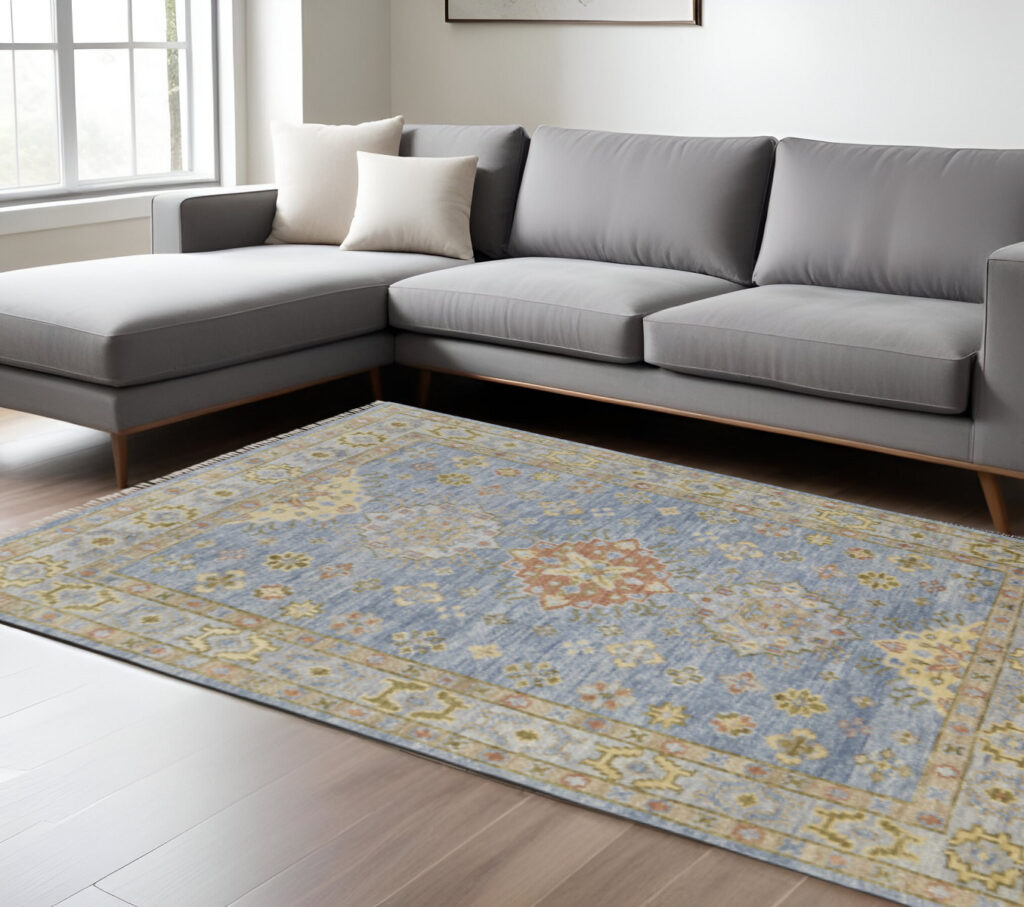
In a hand-knotted rug, each knot is tied around the warp threads, then the weft is packed, and the pile is sheared. It is the slowest of the methods in this guide. The density of the knots, the quality of the wool or blend, and the evenness of the work all affect how the rug feels and how clearly a pattern holds. We do not list knots per square inch on these product pages, so we will not invent a knot count. What you can use instead is the listed material, the listed thickness, close photos of the pile and the back, and, if you want a second check, a question on your quote.
Some hand-knotted rugs in the collection are listed as wool; others are listed as a wool blend. The 8×10 ivory and brown abstract rug pictured earlier is listed as wool. The 9×12 geometric rug above is listed as a wool blend. That distinction matters if you are specifically shopping for wool, and it is explained more fully in the hand-knotted wool rugs buyer’s guide.
Hand-knotted rugs are often the right handmade choice for a main living room, especially if you want a piece you can rotate, pad and live with rather than a short-term layer. They are usually heavier than a flatweave and less “plush” than a thick tufted rug of similar height, because the structure comes from knots, not from a glued pile. Browse the collection at hand-knotted rugs, and size the rug with the same living-room rules in what size rug for a living room.
Hand-Tufted Rugs
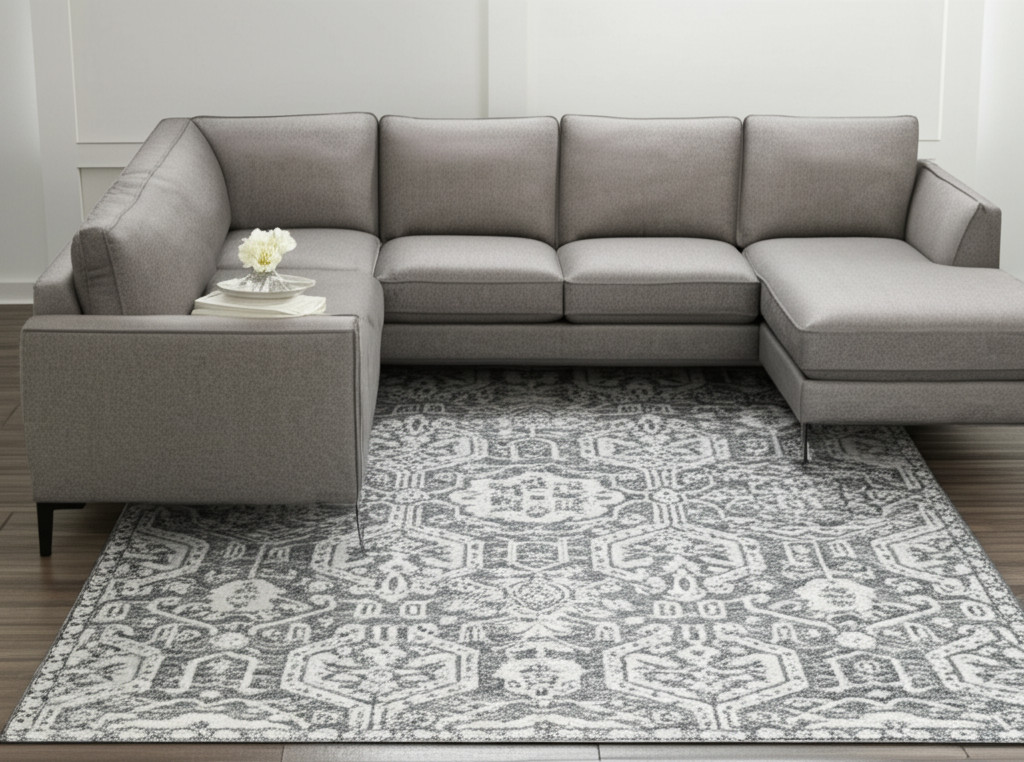
A hand-tufted rug is still handmade, but the yarn is punched through a stretched cloth with a tufting tool rather than tied in individual knots. The back is then coated and typically covered with a secondary cloth. The gray and white geometric 9×12 above is listed as a wool blend with a cotton back — a typical tufted finish.
Because tufting is faster than knotting, a tufted rug can offer a handmade look and a softer, thicker face at a different place in the assortment than a comparable hand-knotted piece. The trade-off is structural. The pile is held by the backing system, not by knots around the warp, so care and long-term wear are not the same as on a hand-knotted rug. Avoid folding a tufted rug sharply, and be gentle with vacuum beater bars. If a tufted rug gets wet through the backing, it needs to dry thoroughly.
Choose a tufted rug when you want handmade character and a cushioned pile, and you are comfortable reading it as tufted, not as knotted. If a listing ever feels ambiguous, ask us to confirm the method before you approve a quote.
Flatweave Rugs
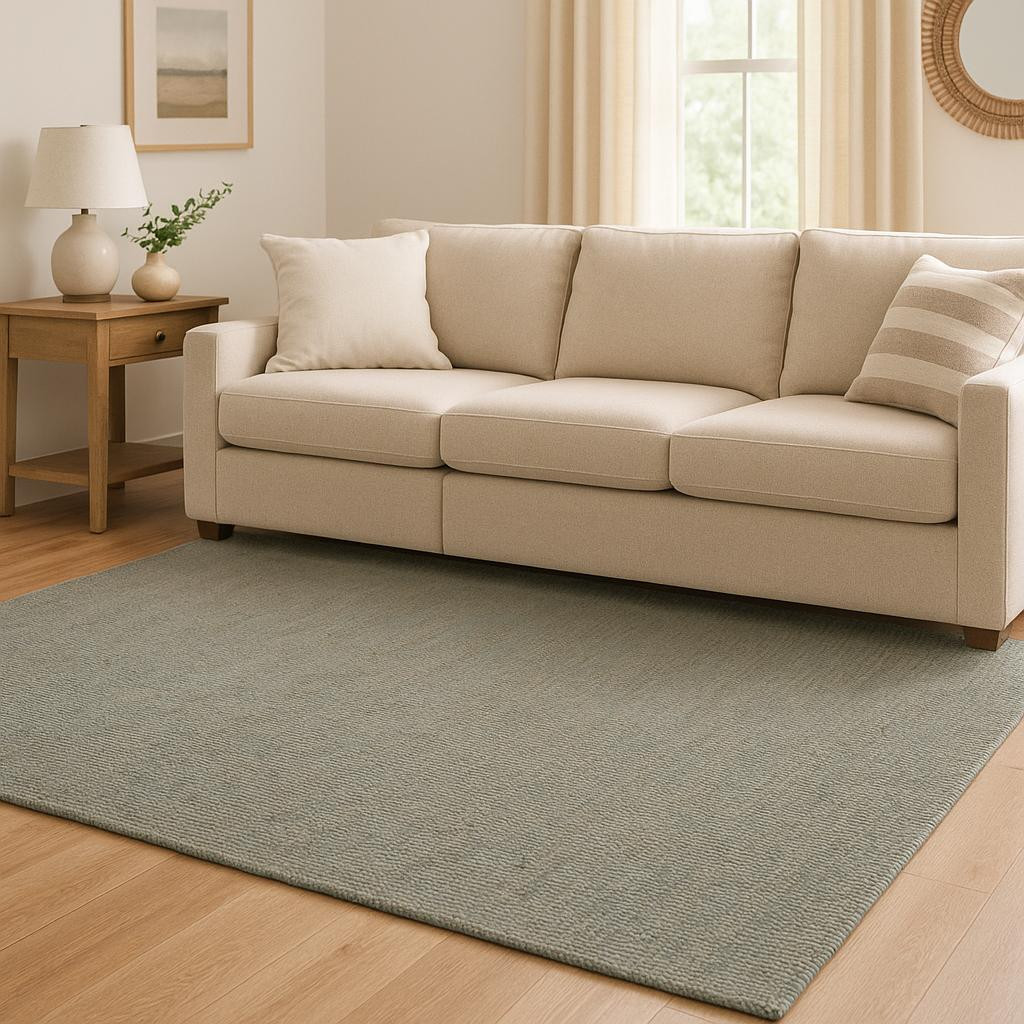
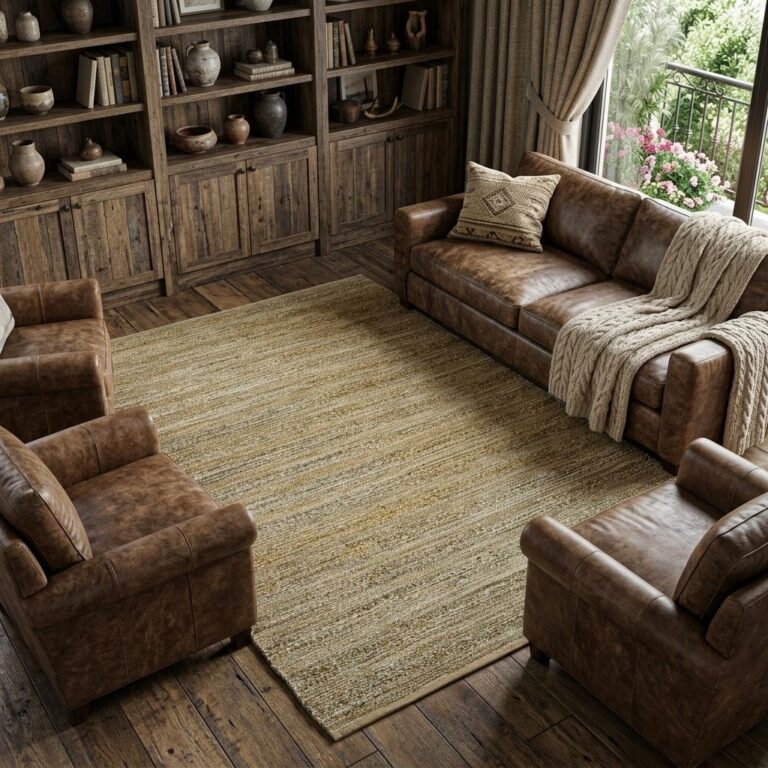
Flatweaves are woven so they have little or no pile. Kilims are a well-known type of flatweave. In our handmade collection you will also find jute flatweaves, such as the sage 8×10 above, which is listed as jute. A low, tight weave can sit more easily under doors and furniture and is often easier to vacuum than a high pile. Many flatweaves feel more casual and textural than a thick knotted or tufted rug.
Jute is a natural plant fiber. It suits indoor rooms where you want a matte, informal surface. It is not the first choice for a damp or fully exposed patio; natural plant fibers absorb moisture and do not behave like the polypropylene and polyester outdoor rugs described in the outdoor materials guide. If you like the look of a flatweave indoors, browse flatweaves and kilims and confirm the fiber on each page — not every kilim-look rug is a handmade jute weave, and some kilim-pattern pieces elsewhere on the site are listed as PET or polypropylene.
Machine-Made and Power-Loomed Rugs
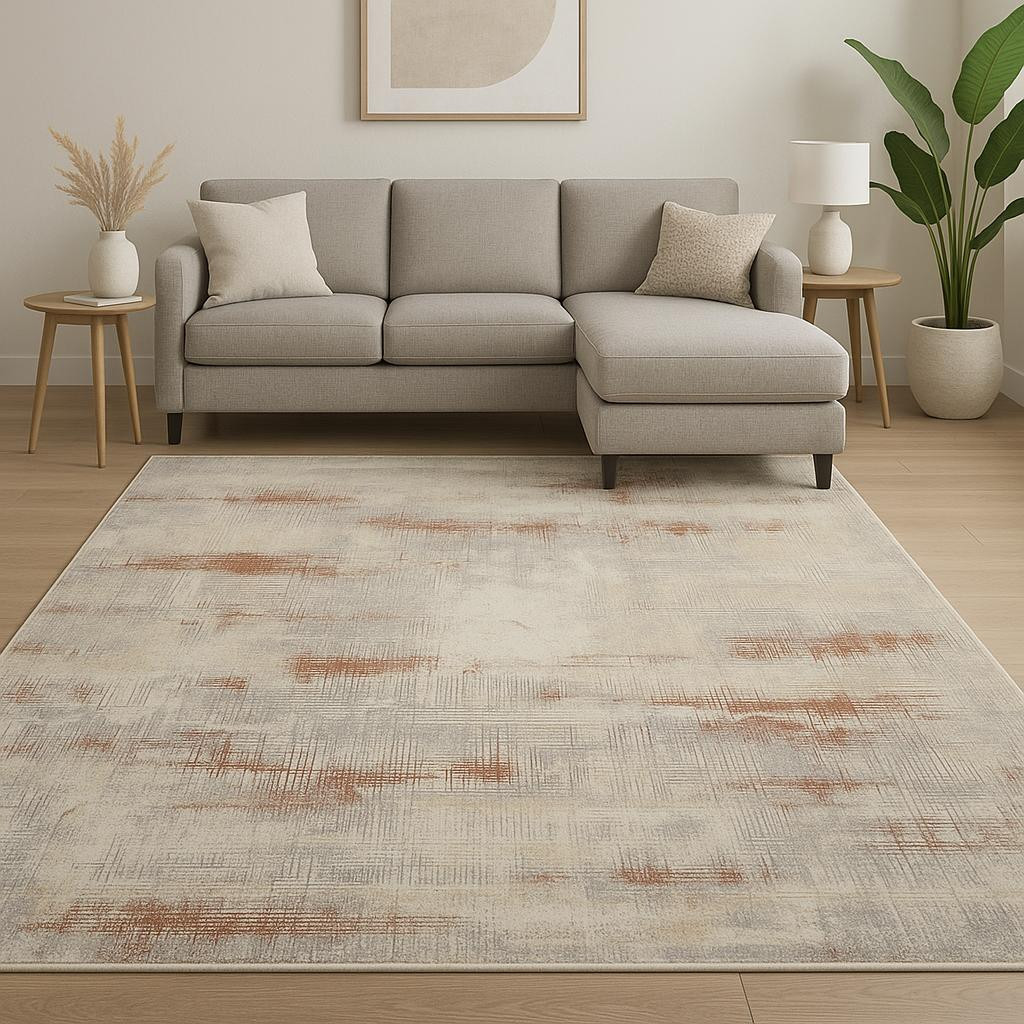
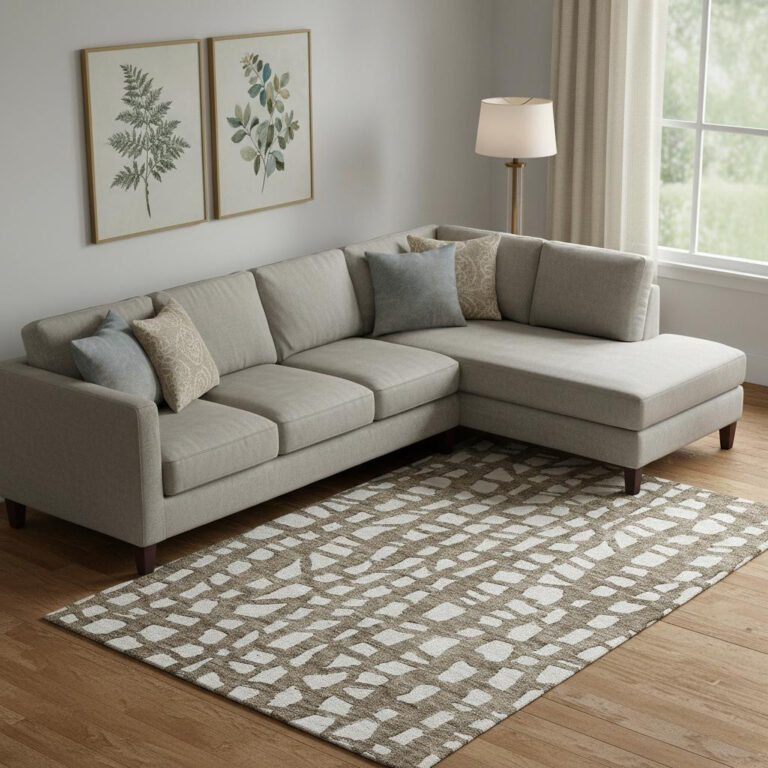
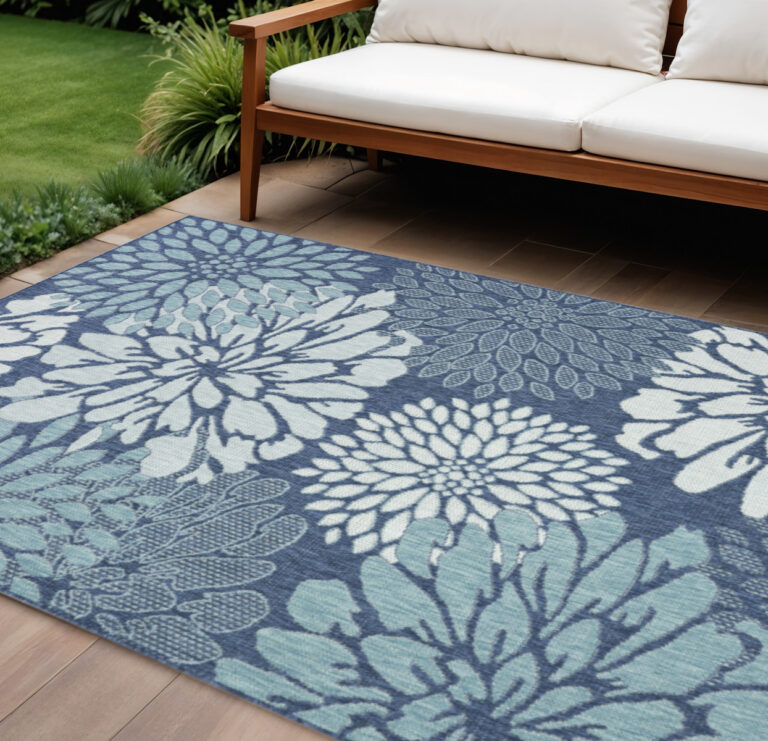
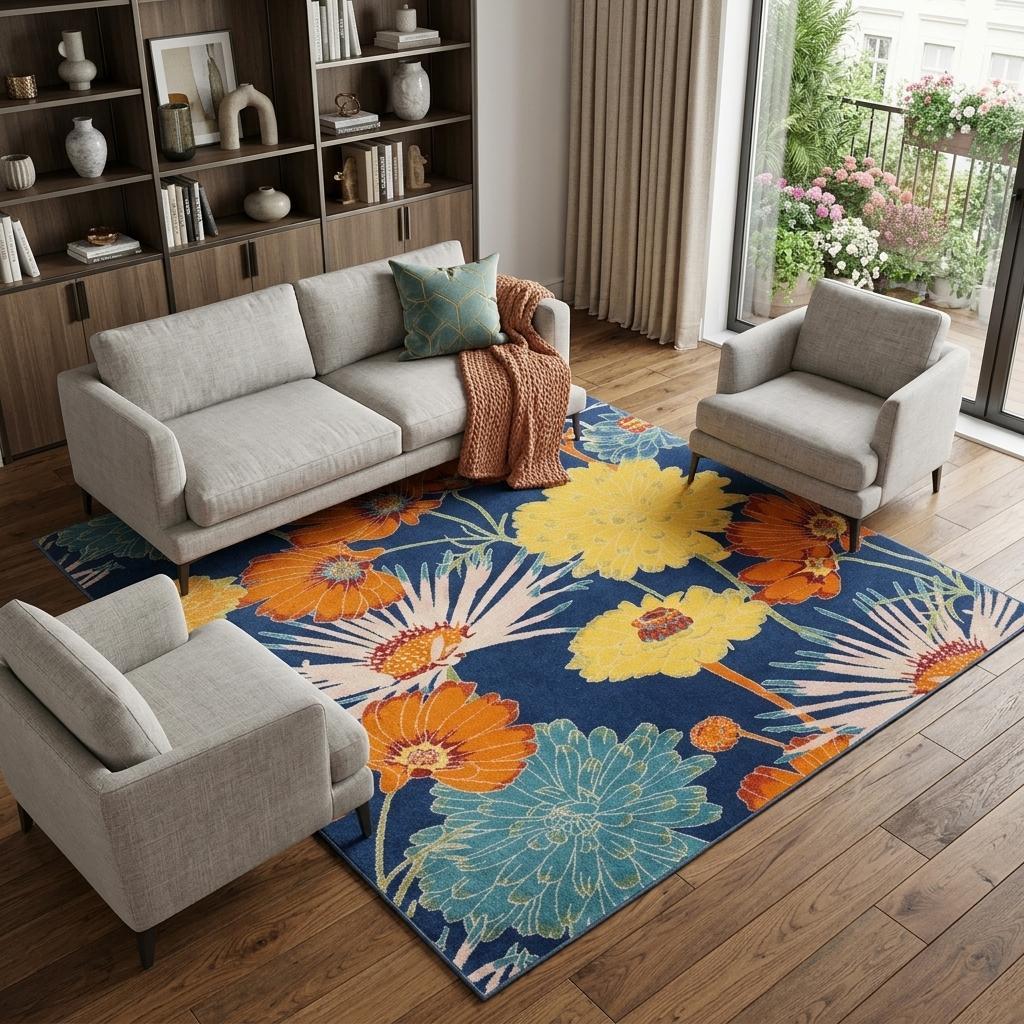
Power-loomed rugs are machine-made: a loom weaves the rug in a controlled, repeatable way. The 8×10 gray abstract rug above, and the 9×12 blue botanical-leaves rug in the same construction, are listed as polypropylene. That fiber is common in machine-made indoor area rugs because it is even, lightweight compared with a heavy wool knotted rug, and straightforward to clean day to day.
Machine-made is the right answer in many rooms. If you want a specific 8×10 or 9×12, a consistent pattern, and an indoor rug you can vacuum without special ceremony, a power-loomed area rug is a practical place to start. You will find many of these sizes in area rugs. What it will not do is become a hand-knotted rug in a product title. If the handmade character is the point of the purchase, stay in the handmade or hand-knotted collections and use this comparison to keep the two paths clear.
Comparison Table
This table is a buying aid, not a lab test. It summarizes how these methods usually differ when the product title and material are used correctly. Always check the individual listing.
| Hand-knotted | Hand-tufted | Flatweave | Power-loomed (machine-made) | |
|---|---|---|---|---|
| How it is made | Each knot is tied by hand around the warp | Yarn is punched through a cloth, then backed | Woven by hand with little or no pile | Woven on a mechanical loom |
| Typical Vaeny materials (examples) | Wool or wool blend, as listed | Wool blend, often with a cotton back | Jute (and other fibers when listed) | Often polypropylene, as listed |
| Look at the back | Pattern usually visible; knots form the structure | Cloth back often covers the work | Often similar on both sides | Even, regular machine structure |
| Feel underfoot | Dense, structured pile; thickness is listed on the page | Often plusher for the height, because of the backing | Low and firm; easy under doors | Even pile; varies by style |
| Good starting use | Main living room, longer-term piece | Handmade look with a softer face | Casual indoor rooms, lower profile | Straightforward indoor area-rug sizes |
| Care emphasis | Gentle vacuum, pad, professional clean for wool | Protect the backing; avoid sharp folds and soaking | Shake or vacuum; keep jute dry indoors | Regular vacuuming; follow the product notes |
Which Construction Fits Your Room
Use the room first, then the method:
- Primary living room, piece you want to keep. Start with hand-knotted rugs, then confirm wool versus wool blend. Size it as you would any living-room rug.
- Handmade look and a softer pile, without knotting. Look at hand-tufted rugs in the handmade rugs collection and read the backing note.
- Casual texture and a low profile. A jute flatweave is a clear indoor option. Keep it out of wet rooms and off exposed patios.
- A specific indoor size and an even pattern. A power-loomed rug in area rugs is often the most direct match, including standard 8×10 and 9×12 sizes.
- Patio, deck or open porch. Do not substitute an indoor wool or jute rug. Use outdoor rugs and the materials guide.
Dining rooms follow the same construction logic, but size is stricter because chairs must stay on the rug when pulled out. See rug size under a dining table before you fall in love with a 5×8 that will not clear the chairs.
How to Read a Vaeny Product Page
A useful habit is to read four fields in order: title, material, dimensions, short description. The title should tell you the method and the size. The material field tells you wool, wool blend, jute, polypropylene or polyester. Dimensions include the listed thickness, which is a better clue than a photo alone. The short description may mention the back (canvas, cotton, jute) or a low pile.
We will not invent a country of origin, a knot count, a durability year or a review score that is not on the page. If a detail is missing, it is missing. Your written quote is the place to confirm what is listed and to add room measurements, pad requests and delivery notes.
Shopping Rugs at Vaeny
Browse handmade rugs, hand-knotted rugs, flatweaves and kilims, and area rugs. When you have a shortlist, request a personal written quote. There is no payment on the website. The quote confirms the piece, the material as catalogued, the delivery method and the lead time, and shipping to the contiguous United States is free.
Send room measurements and, if you can, a short note about traffic, pets or whether the rug must sit under dining chairs. If you are deciding between constructions, include both product links and we will help you compare what is actually listed, not what a photo might imply.
Frequently Asked Questions
Is a handmade rug always wool?
No. Handmade describes the method. The fiber is listed separately. At Vaeny you will see wool, wool blend and jute among handmade rugs, and you should go by the material field on the product you are considering.
Is a hand-tufted rug the same as a hand-knotted rug?
No. Both are handmade, but tufted pile is punched through a backing and usually covered with a cloth back. Hand-knotted pile is tied around the warp. They wear and should be cared for differently.
Are machine-made rugs poor quality?
Not by definition. A power-loomed polypropylene area rug can be a good, straightforward choice for an indoor room when you want a clean size and an even pattern. It is simply a different construction from a hand-knotted wool rug.
Which rug is best for a busy living room?
A low to medium pile in a fiber that can handle traffic is easier than a very shaggy surface. Wool and wool-blend hand-knotted rugs are traditional living-room choices; a power-loomed indoor rug can also work when the listing matches the room. We will not invent a “best” fiber for every house — describe how you use the room in your quote.
Can I put a handmade jute rug on a patio?
Jute is a natural fiber and is a poor match for an uncovered, wet outdoor space. Choose a rug from the outdoor collection instead and compare polypropylene or polyester as listed.
Related guides
- Kilim and Flatweave Rugs: A Buyer’s Guide
- Hand-Knotted Wool Rugs: A Buyer’s Guide
- Outdoor Rug Materials: How to Choose a Patio Rug That Lasts
- What Size Rug for a Living Room
- Rug Size Under a Dining Table
- All Home Buying Guides
Ready to compare options? Browse handmade rugs or area rugs.