Persian and Oriental Rugs: A Buyer’s Guide
Persian and oriental rugs are the classic traditional rugs: rich medallions, curling vines, deep borders and colors that soften with age. The two words are often used interchangeably in product titles, but they have more precise meanings, and the construction behind a rug matters as much as its pattern. This guide explains the terms, how to read a listing, and how hand-knotted wool compares with machine-made Persian-style designs.
Part of our Home Buying Guides. This Persian and oriental rugs guide uses examples from the hand-knotted rugs and area rugs collections. For construction basics see handmade vs machine-made rugs; for wool and knot quality see the hand-knotted wool rugs buyer’s guide; and for flat, tapestry-woven traditional rugs see kilim and flatweave rugs.
What “Persian” and “Oriental” Mean
In the strict, traditional sense, a Persian rug is a hand-knotted rug woven in Iran (historically Persia), often named for the city or region where its design developed, such as Tabriz, Kashan, Isfahan, Heriz or Kerman. “Oriental rug” is the broader, older trade term for hand-knotted pile rugs from a wide weaving belt across Asia, including Iran, Turkey, the Caucasus, Central Asia, India and China. Every true Persian rug is an oriental rug; not every oriental rug is Persian.
Today both words are also used as design words. A rug titled “oriental” or “Persian” may describe the pattern, a traditional medallion or floral layout, rather than where or how it was made. That is not wrong, but it means you should read the construction and fiber before comparing two rugs that look alike in photos.
Read the Label First
- Construction. “Hand Knotted” and “Power Loom” or “Washable” describe very different rugs. Construction decides feel, lifespan and care.
- Material line. Wool, wool blend, polyester and microfiber are the fibers you will see on traditional-design rugs in this catalog.
- Backing. A non-slip rubber or felt backing is a sign of a machine-made rug. A hand-knotted rug has no separate backing; its back shows the knots.
- Fringe. On a hand-knotted rug the fringe is usually the ends of the warp threads, part of the rug’s foundation. Many listings mention fringe or tassel ends.
We describe these rugs as they are listed. We do not label any of them antique or describe where a design was woven unless the product page says so. If you want a detail confirmed, add the product link to your quote request and ask.
Hand-Knotted Wool Oriental Rugs
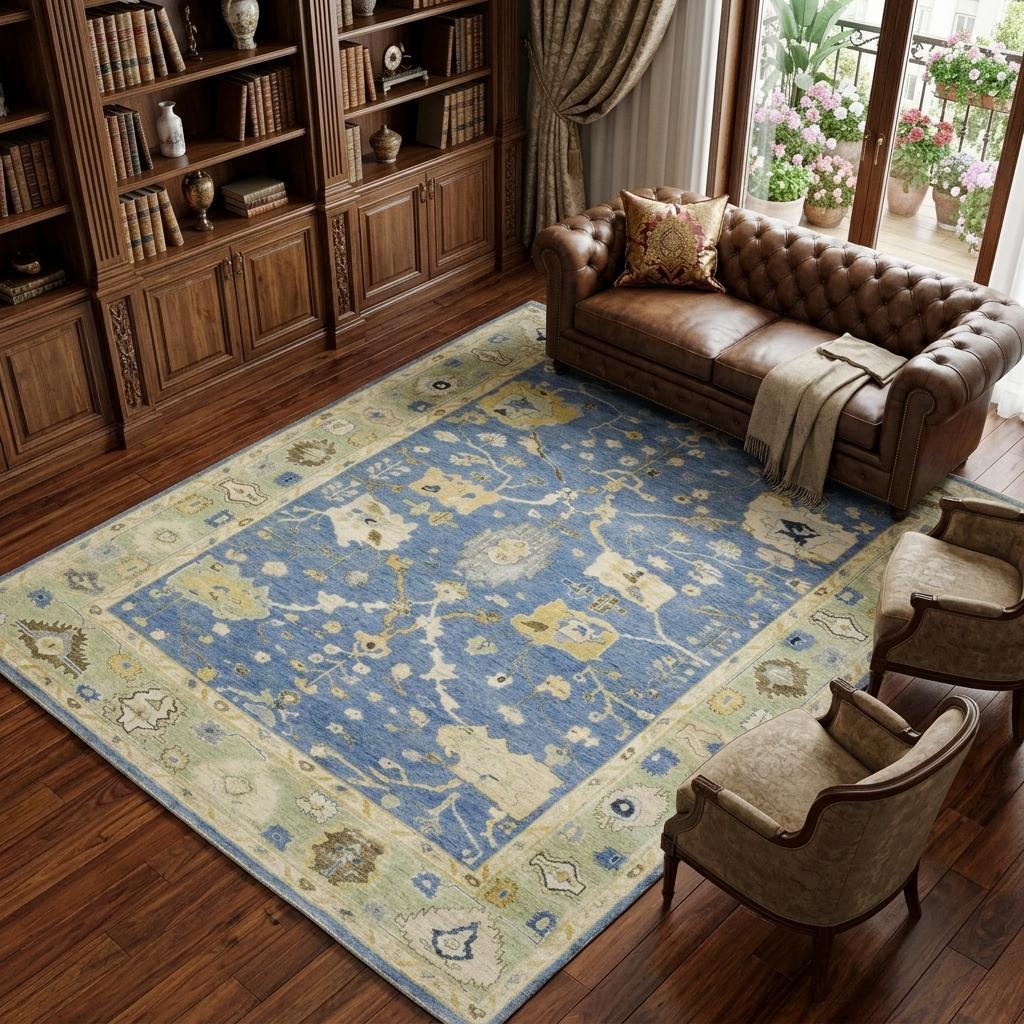
The 8×10 blue and green wool oriental rug above is listed as hand-knotted wool with fringe, at about 120 by 96 inches. The listing describes it as crafted by skilled artisans, with no two pieces exactly alike. That is typical of hand-knotted work: each knot is tied by hand around the warp threads, so small variations in color and line are part of the rug, not a flaw.
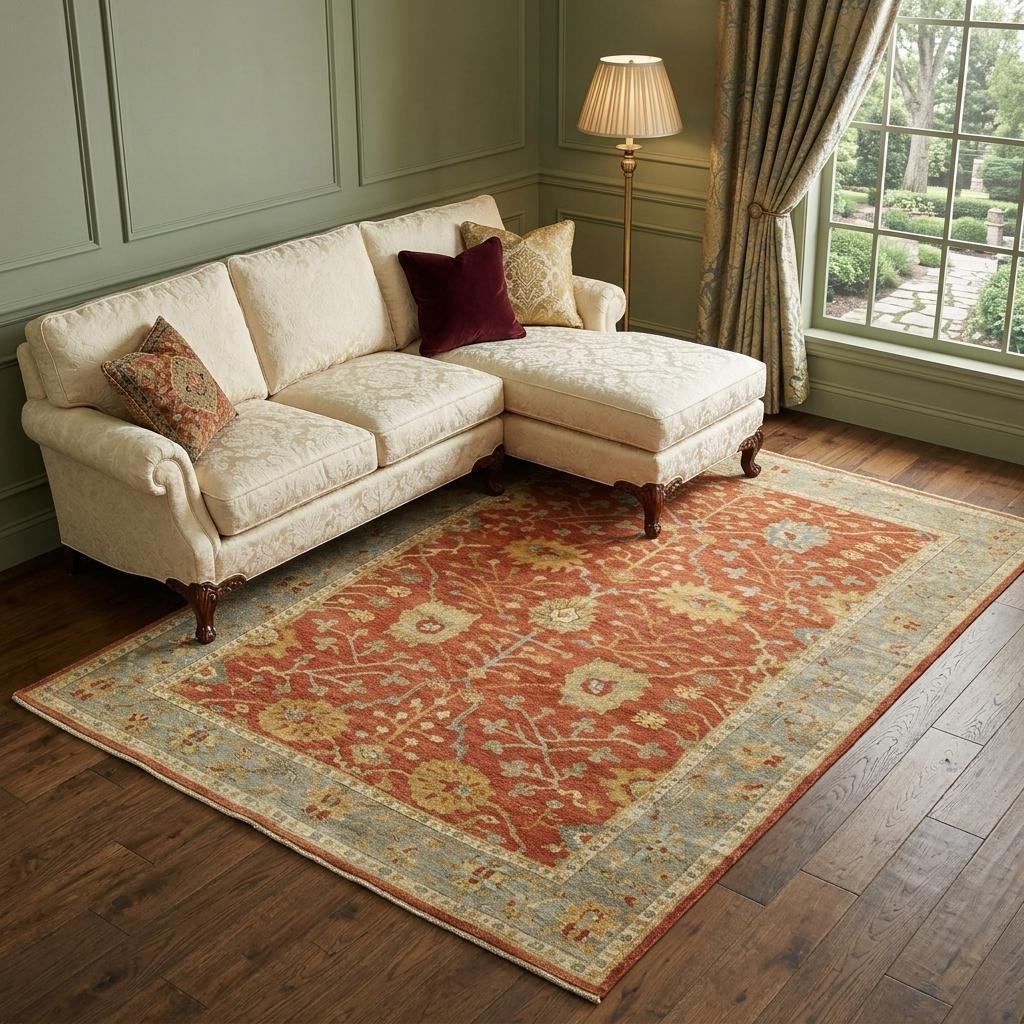
Deep red is one of the most traditional colors in Persian and oriental designs. The 9×12 red and gray wool oriental rug is listed as hand-knotted wool at about 144 by 108 inches, a size that suits a large living room or a dining table for eight. The same oriental hand-knotted wool family is listed in 6×9, 8×10, 9×12, 10×14 and 10-foot runners in several colorways.
Choose hand-knotted wool when you want a rug that can last for many years with care, has the depth of hand work and a natural fiber, and can be repaired or professionally cleaned rather than replaced. The hand-knotted wool buyer’s guide covers wool versus wool blend and how knot density affects detail.
Persian-Style and Oriental-Design Machine-Made Rugs
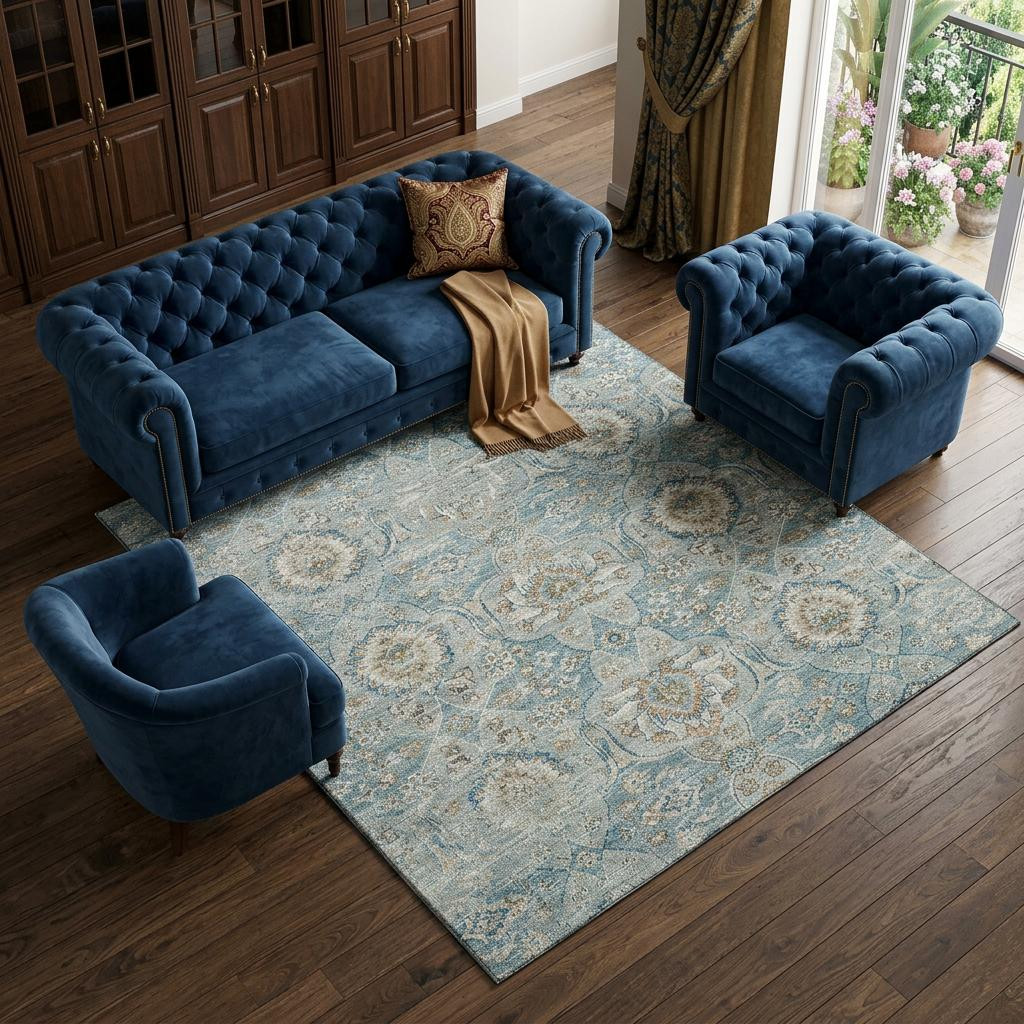
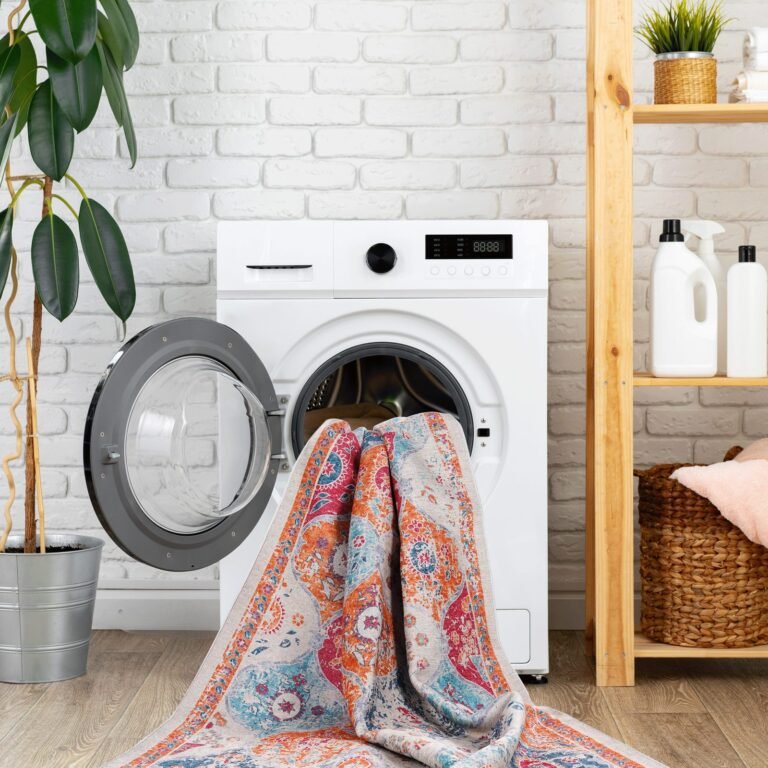
Machine-made rugs bring Persian and oriental patterns into rooms where easy care matters more than hand work. The 9×12 Persian blue, coffee and ivory floral medallion rug is listed in microfiber with a non-slip rubber and felt backing, described as distressed, washable and stain resistant. The distressed finish gives a softly faded traditional look.
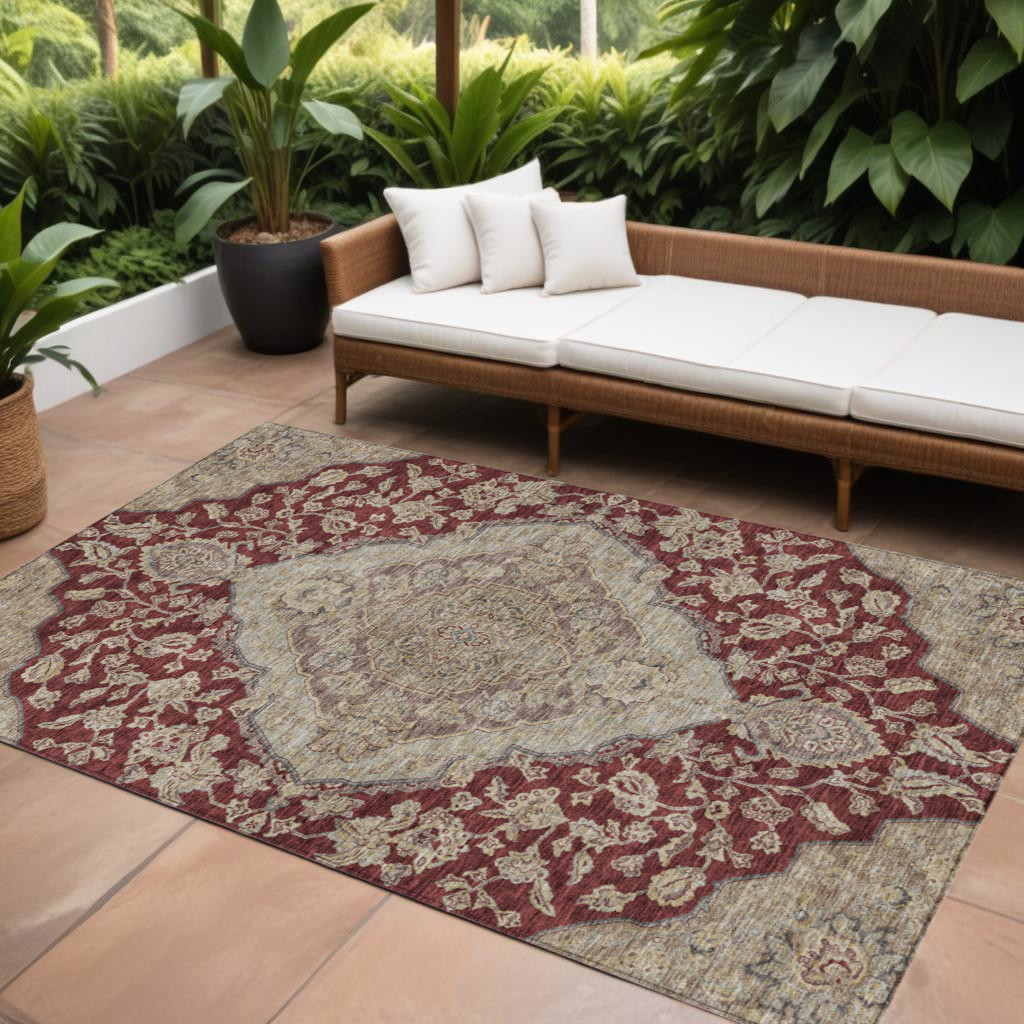
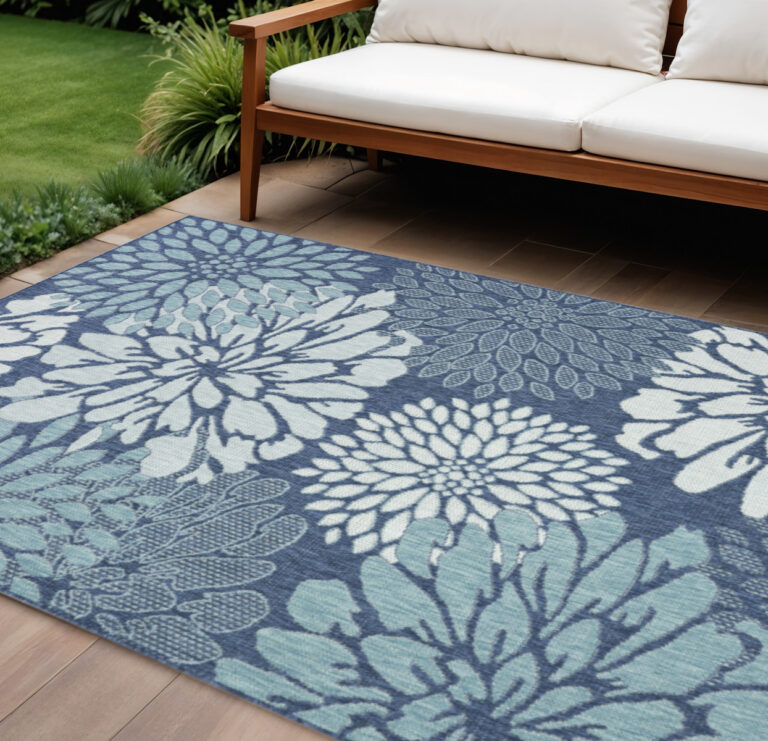
The 8×10 red, beige and brown oriental washable rug is listed in polyester, about 0.19 inches thick, and described for indoor and outdoor use. A low, washable oriental-design rug like this suits entries, kitchens, dining rooms and covered porches, places where a hand-knotted wool rug would be harder to keep clean.
These rugs share a look with hand-knotted oriental rugs, not a construction. Compare them as practical, washable traditional-design rugs, and compare hand-knotted rugs with other hand-knotted rugs.
Patterns and Names You Will See
| Term | What it means |
|---|---|
| Medallion | A central motif, often a diamond or oval, framed by corner pieces and borders. The classic Persian layout. |
| All-over (overall) | A repeating pattern across the whole field with no single center. Easier to place under furniture. |
| Field and border | The field is the main central area; the border is the band of patterns framing it. |
| Floral and vine | Flowers, palmettes and curling vines, typical of city-style Persian designs. |
| Geometric and tribal | Bold angular motifs associated with village and nomadic weaving. |
| Gul (Bokhara) | A repeated octagonal motif linked to Turkmen weaving and sold under the name Bokhara. |
| Tabriz, Kashan, Heriz, Isfahan | Traditional Persian city or regional design names. On a listing they may describe the pattern rather than where the rug was made. |
| Distressed | A finish that gives a worn, faded, vintage look; common on machine-made traditional designs. |
How to Tell a Hand-Knotted Rug
- Turn over a corner. On a hand-knotted rug the pattern shows clearly on the back, with individual knots visible. A latex, rubber or felt backing points to a machine-made or tufted rug.
- Look at the fringe. On a hand-knotted rug the fringe continues from the warp threads. A fringe sewn or glued on afterward is a machine-made sign.
- Expect small irregularities. Slight differences in width, line or color (called abrash when the shade shifts) are normal in hand work. Perfect symmetry everywhere is more typical of a machine.
- Feel the fiber. Wool has a natural spring and slight lanolin feel; polyester and microfiber feel smoother and more uniform.
The handmade vs machine-made rugs guide goes deeper into hand-knotted, hand-tufted, flatweave and power-loomed construction.
Comparison Table
| Example from the catalog | How it is listed | Best used as |
|---|---|---|
| 8×10 blue and green wool oriental rug | Hand-knotted, wool, fringe | A long-term living room or bedroom rug |
| 9×12 red and gray wool oriental rug | Hand-knotted, wool | A large living room or dining room centerpiece |
| 6×9 blue and green wool oriental rug | Hand-knotted, wool, fringe | A smaller living room, bedroom or study |
| 10′ beige, blue and ivory wool oriental runner | Hand-knotted, wool, about 120″ × 29.5″ | A hallway or entry runner |
| 9×12 Persian floral medallion rug | Microfiber, washable, rubber and felt backing, distressed | A Persian-style look with easier care |
| 8×10 red, beige and brown oriental rug | Polyester, washable, indoor/outdoor | Kitchens, entries, dining rooms, covered porches |
Sizes and Rooms
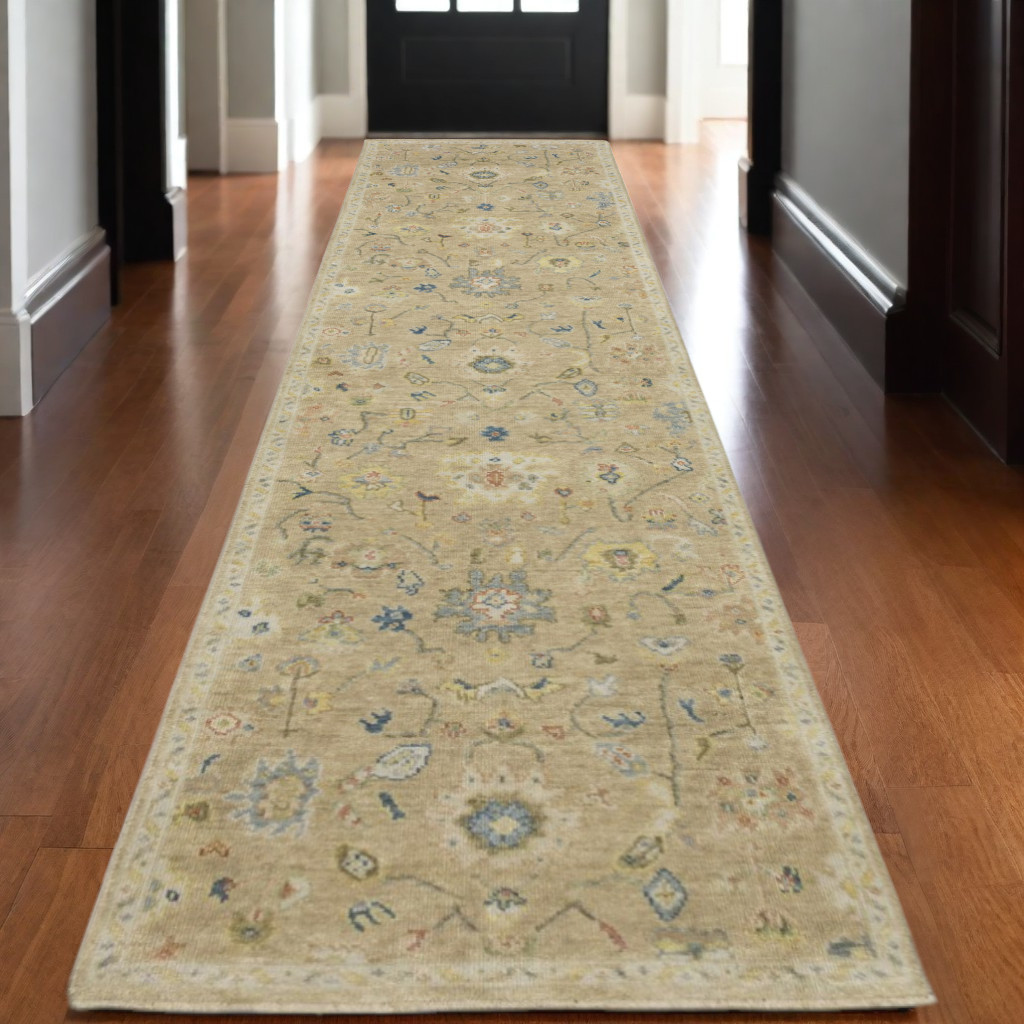
Size a Persian or oriental rug with the same rules as any rug: an 8×10 for most living rooms, a 9×12 for larger rooms and dining tables for eight, and a 6×9 such as the 6×9 blue and green wool oriental rug for compact rooms. A medallion design looks best when the medallion is not hidden under a coffee table or bed, so an all-over pattern can be the better choice under heavy furniture. Runners like the 10-foot wool oriental runner carry the look into a hallway. See the rug size guide for the full chart.
Care
- Vacuum hand-knotted wool regularly with the beater bar off or on a gentle setting, and avoid pulling the fringe into the vacuum.
- Blot spills; do not rub. For hand-knotted wool, use a professional rug cleaner for deep cleaning.
- Follow the washing instructions on the product page for washable polyester and microfiber rugs.
- Rotate the rug every few months and limit strong direct sun to keep colors even.
- Use a rug pad on hard floors.
Shop Persian and Oriental Rugs at Vaeny
- Hand-knotted rugs, including wool oriental designs
- Handmade rugs
- Area rugs, including Persian-style and oriental-design washable rugs
- Flatweave and kilim rugs
Every Vaeny order begins with a personal written quote, with free shipping to the contiguous US. Our team in Fresno, California reads every request. Tell us whether you want hand-knotted wool or an easy-care washable design, plus your room size, and we will help you compare listings. Email cs@vaeny.com or send us a WhatsApp text with the product links.
Frequently Asked Questions
What is the difference between a Persian rug and an oriental rug?
Traditionally, a Persian rug is hand-knotted in Iran, while “oriental rug” is a broader term for hand-knotted rugs from across Asia. Today both words are also used to describe a traditional design, so read the construction and fiber on the listing.
Are the oriental rugs at Vaeny hand-knotted?
Some are. The wool oriental rugs in the hand-knotted collection are listed as hand-knotted wool. Others with oriental or Persian designs are machine-made washable polyester or microfiber rugs. The product page states which.
Is a Persian-style washable rug a good choice?
Yes, for busy rooms, kitchens, entries and homes with kids or pets. It gives the traditional look with easier cleaning, but it is a different construction from a hand-knotted wool rug.
How can I tell if a rug is hand-knotted?
Check the back: a hand-knotted rug shows the pattern and individual knots, with no rubber or latex backing. Its fringe is part of the warp threads, and small irregularities are normal.
What size Persian rug do I need for a living room?
An 8×10 suits most living rooms, a 9×12 suits larger rooms or sectionals, and a 6×9 suits compact rooms. Keep the medallion visible rather than under a coffee table.
Shop the look: Persian and oriental rugs, including hand-knotted wool, washable designs and oriental runners.
Related guides