Runner Rug Guide: Sizes, Placement and Materials
A runner rug is the long, narrow rug that turns a bare hallway into a finished space, protects the floor in front of a kitchen sink and adds softness beside a bed. Choosing one is mostly about two numbers: width and length. This runner rug guide shows the common sizes, how to measure a hallway or kitchen, and which materials hold up best where people walk every day.
Part of our Home Buying Guides. Browse every runner in one place in runner rugs. For standard rug sizes see the rug size guide.
Runner Rug Sizes
Runners are named width by length in feet, like area rugs, but many listings simply give the length (for example “8′ runner”) because the width is close to standard. The table shows typical sizes and where they fit. Always check the exact listed dimensions on the product page.
| Runner size | In inches | Typical use |
|---|---|---|
| 2′ × 6′ | 24″ × 72″ | Short hall, beside a bed, in front of a vanity |
| 2′6″ × 8′ | 30″ × 96″ | Most standard hallways, kitchen galley, beside a queen bed |
| 2′6″ × 10′ | 30″ × 120″ | Longer hallways, long kitchen counters |
| 2′6″ × 12′ | 30″ × 144″ | Long halls, upstairs landings |
| 3′ × 12′ and longer | 36″ × 144″+ | Wide or very long hallways; some runners are listed up to 20 feet |
Widths of about 27 to 32 inches are very common. The 2′ × 8′ washable runners in the catalog, for example, are listed at 27 by 90 inches.
Hallway Runners: How Long and How Wide
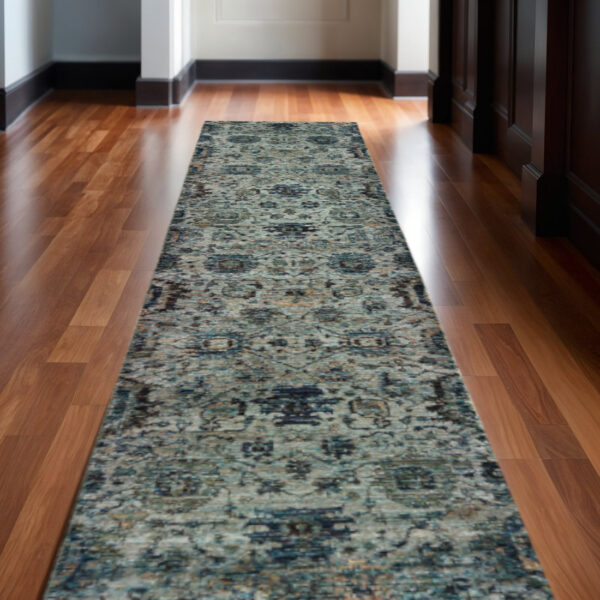
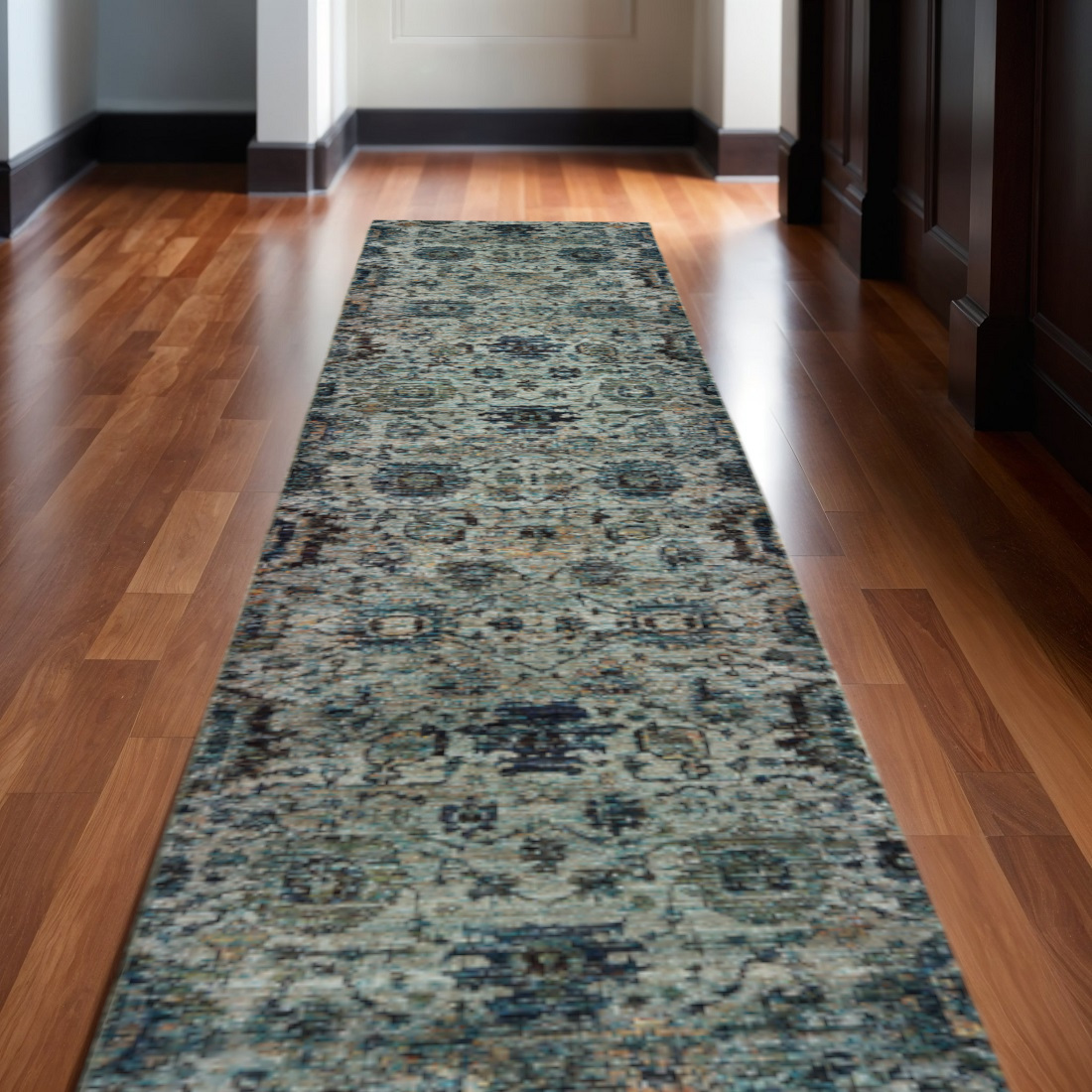
Measure the hallway from wall to wall and from end to end. A runner usually looks best when it leaves a strip of floor on both sides, often about 4 to 6 inches, so the hall still reads as a hall and the runner does not curl up at the baseboards. For length, leave roughly 6 to 12 inches of bare floor at each end, and keep the runner clear of door swings.
If one runner is not long enough, choose a single longer piece rather than two short ones; listings such as the 12′ blue oriental runner or the 14′ wool hand-knotted oriental runner cover long halls in one rug. Where a hallway has doors on both sides, leave each doorway clear rather than running the rug under the door.
| Hallway length | Runner length to consider |
|---|---|
| About 8 to 10 feet | 6 to 8 foot runner |
| About 10 to 12 feet | 8 to 10 foot runner |
| About 12 to 14 feet | 10 to 12 foot runner |
| About 14 feet and longer | 12 foot runner or longer |
Kitchen Runners
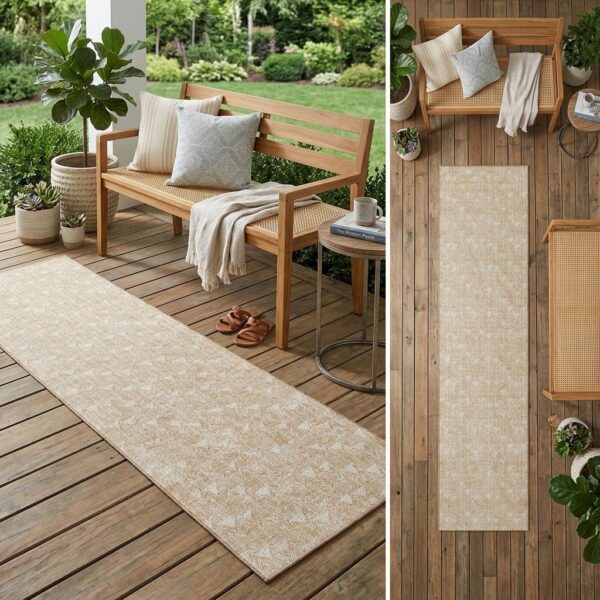
In a kitchen, a runner usually sits in front of the sink or along the main counter where you stand to cook. Center it on the sink or the work zone and keep it clear of the dishwasher door and the bottom of cabinet doors. Low, flat runners are easier on door clearance than thick pile.
Because kitchens see spills, many people choose a washable or indoor-outdoor runner. The 2′ × 8′ beige geometric washable runner is polyester with a felt backing and is described as stain resistant. See the washable rug guide for how washable rugs compare with wool and jute.
Entryways, Bedrooms and Stair Landings
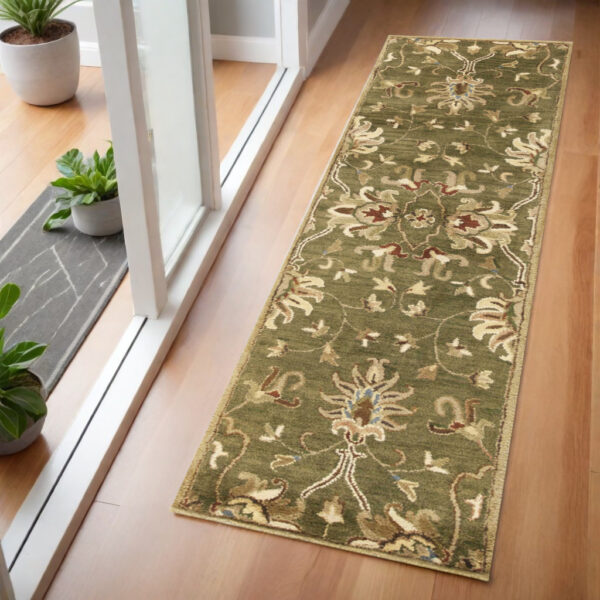
Entryways: a runner leads people in from the door and catches grit. Leave room for the door to swing over it. Bedrooms: a pair of runners on each side of the bed is an alternative to one large rug; our bedroom rug guide compares the options. Landings: a runner on a long landing ties the space to the stairs; measure the landing, not the stair treads.
Wool runners like the 7′ wool floral medallion hand-tufted runner add a softer feel in bedrooms and quieter halls.
Runner Rug Materials Compared
| Material | Feel | Good for | Things to know |
|---|---|---|---|
| Wool | Soft, springy | Halls, bedrooms, landings | Resilient; vacuum without a beater bar; blot spills |
| Polypropylene / olefin | Smooth, firm | Busy halls, entries | Common in power-loomed runners; easy to vacuum |
| Polyester (often washable) | Low and smooth | Kitchens, mudrooms, homes with pets | Follow the care label; many have felt or non-skid backing |
| Jute | Textured, natural | Dry halls and entries | Does not like moisture; avoid kitchens and baths |
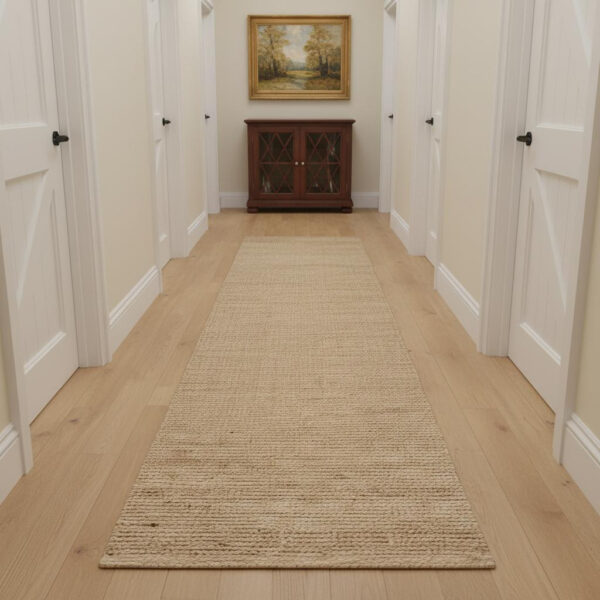
A natural option for a dry hallway is the 12′ natural jute flatweave handmade runner. More on natural fibers is in the jute rug guide.
Keeping a Runner in Place
Long narrow rugs move more than room-sized rugs. On hard floors, use a thin rug pad trimmed a little smaller than the runner on every side, or choose a runner listed with a non-skid backing. Rotate the runner every few months so wear and sun exposure stay even.
Shop at Vaeny
- Runner rugs
- Washable rugs for kitchens and mudrooms
- Persian and oriental rugs, including oriental runners
- Rug pads
Every Vaeny order begins with a personal written quote, with free shipping to the contiguous US. Our team in Fresno, California reads every request. Include the hallway or counter length and width in your request. Email cs@vaeny.com or send us a WhatsApp text with your measurements and a link to the rug you like.
Frequently Asked Questions
What is the standard size of a runner rug?
A common runner size is about 2′6″ by 8 feet. Runners also come in 2 by 6, 10, 12 feet and longer.
How much floor should show on each side of a hallway runner?
Usually about 4 to 6 inches on each side, and about 6 to 12 inches at each end.
Can I put two runners in one hallway?
Yes, in a very long hall or one broken by doors. Keep the gap between them even and use matching or coordinating designs.
What runner is best for a kitchen?
A low, flat runner that is easy to clean, such as a washable or indoor-outdoor runner, sized to the sink or work zone.