Kilim and Flatweave Rugs: A Buyer’s Guide
A flatweave is a rug with little or no pile. A kilim is a traditional kind of flatweave, usually tapestry-woven, with a clear pattern and a thin profile. Those two words are also used more loosely in product titles. In Vaeny’s flatweaves and kilims collection you will find handmade jute flatweaves, handmade wool-and-cotton flatweaves, and kilim-pattern rugs listed as PET or polypropylene. The honest way to shop this collection is to read the construction and the fiber, not to assume every “kilim” is a handmade wool rug.
Part of our Home Buying Guides. This kilim and flatweave rugs guide shows how to read those labels, with examples from the flatweave and kilim rugs collection. It sits beside handmade vs machine-made rugs and the hand-knotted wool buyer’s guide. Size the rug with what size rug for a living room.
What Flatweave and Kilim Mean
In a flatweave, the surface is woven so it has little or no cut pile. That is why a flatweave can sit more easily under a door, a dining chair or a table than a thick tufted or knotted rug. Kilim (sometimes spelled kelim) refers, in the traditional sense, to a slit-tapestry or similar flat weave, often with geometric or striped patterns. A rug can be a handmade flatweave without being a kilim, and a rug can have a kilim pattern without being a handmade kilim.
That second point matters in this collection. Some titles say “Flatweave Handmade.” Some say “Kilim” or “Kilim Pattern” or “Oriental Kilim” and then list a synthetic fiber. Both can be useful rugs. They are not the same construction or the same fiber, and they should not be compared as if they were.
Read the Label First
- The title. “Flatweave Handmade,” “Kilim Pattern,” “Washable” and “Ikat Kilim” are clues, not decoration.
- The material line. Jute, wool and cotton, 100% PET, and polypropylene are different fibers with different care and different indoor or outdoor limits.
- The backing note. A rubber backing, as on the PET kilim-style example below, is a construction clue. Many handmade flatweaves do not have that kind of secondary backing.
- The thickness, when it is listed. A jute flatweave in this collection is listed around 0.2 inches thick. Treat unusual thickness numbers cautiously and ask us to confirm if a figure looks off.
If two photos still look alike, send us the product links on your quote request and ask us to confirm construction and fiber as they are listed. We would rather repeat the catalog than guess. The same habit is used in the handmade vs machine-made guide.
Handmade Jute Flatweaves
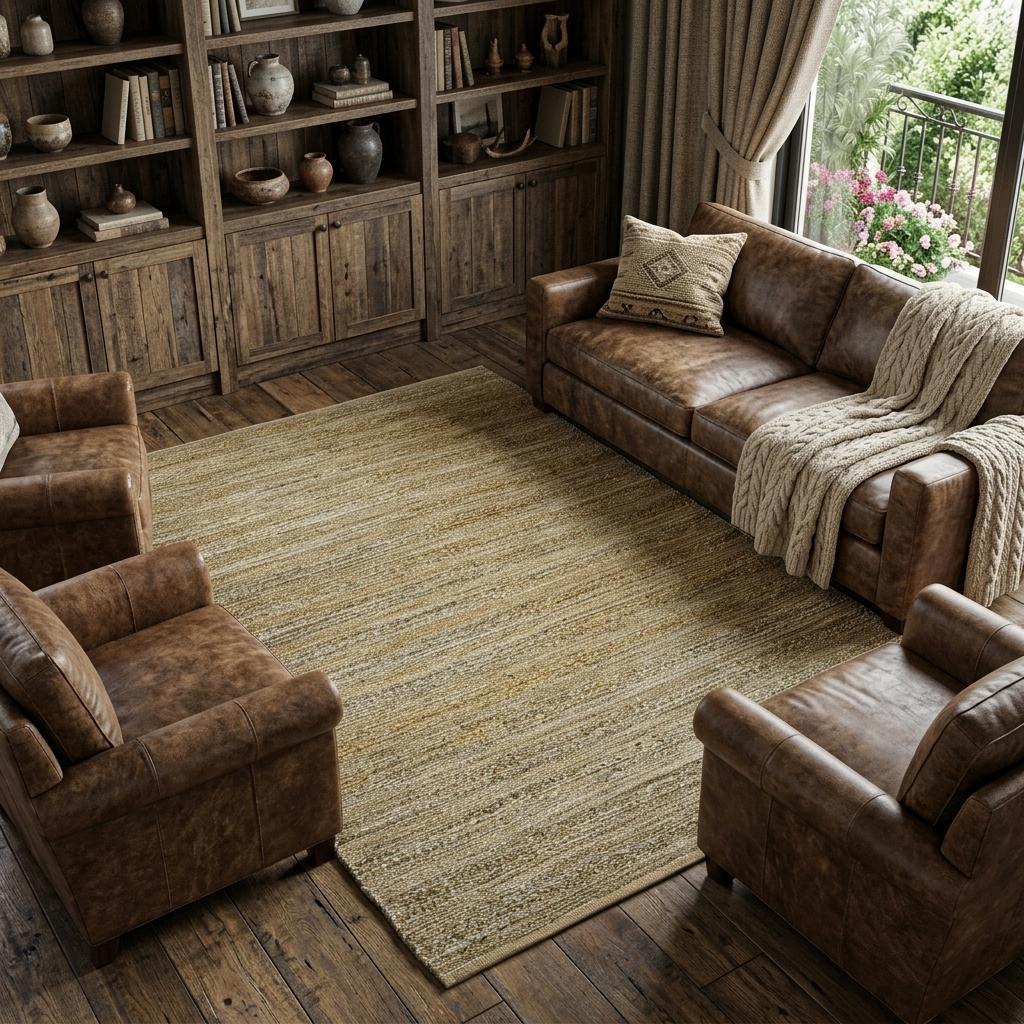
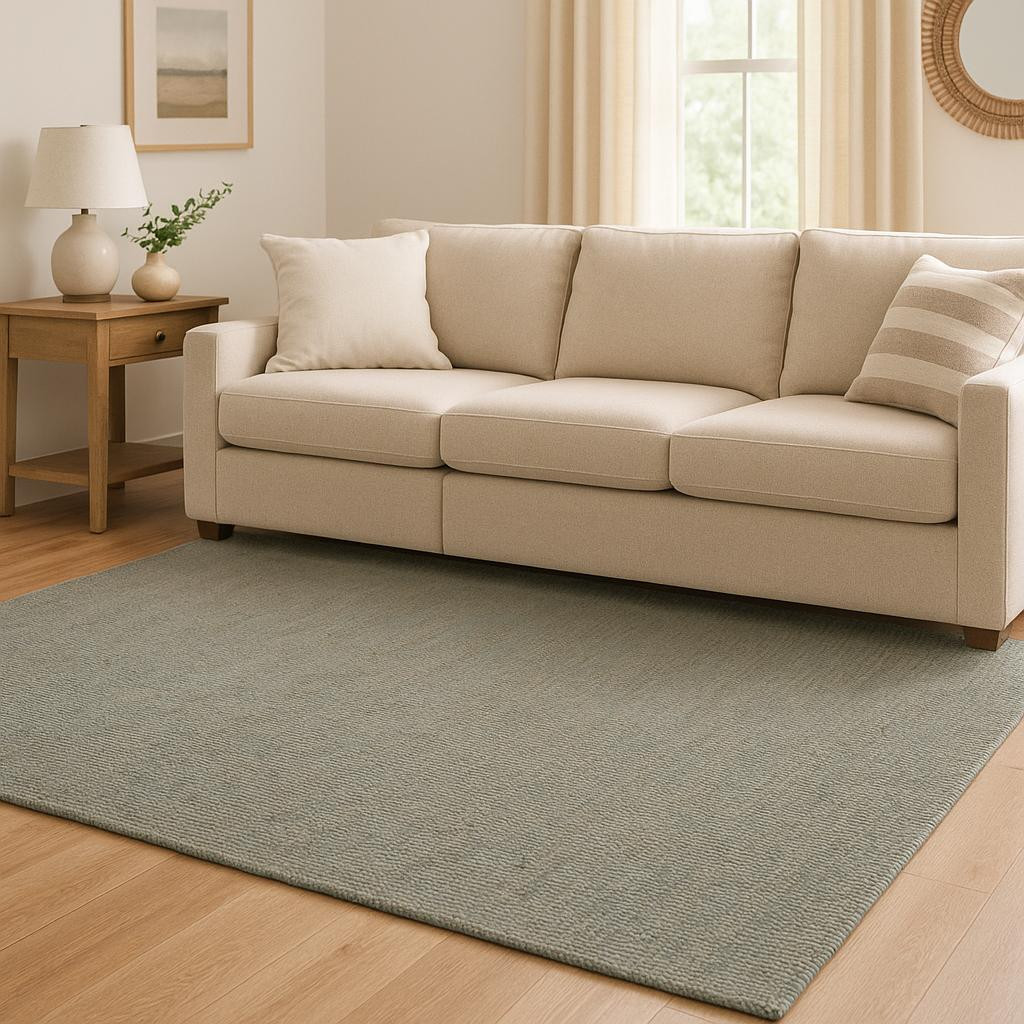
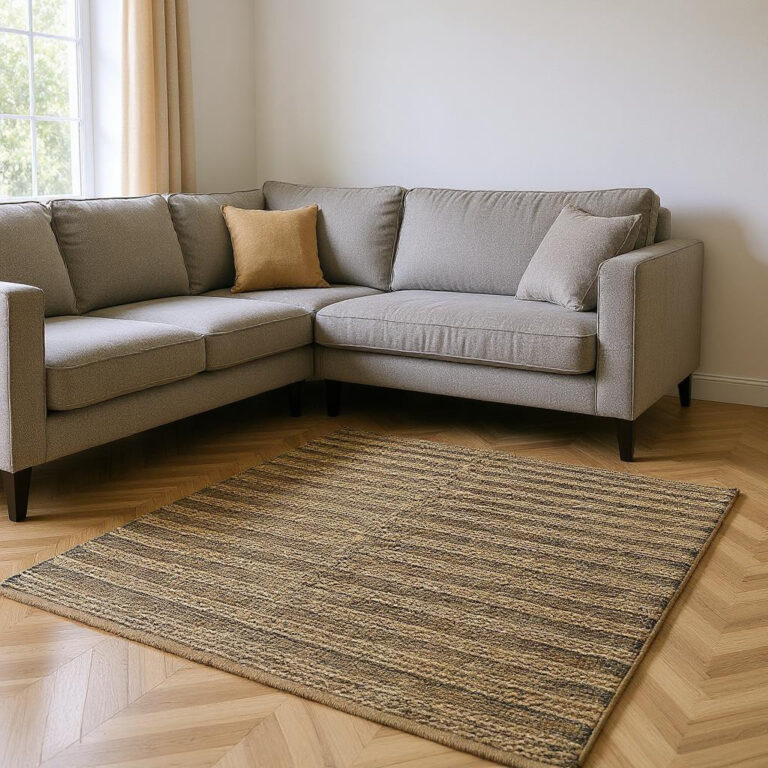
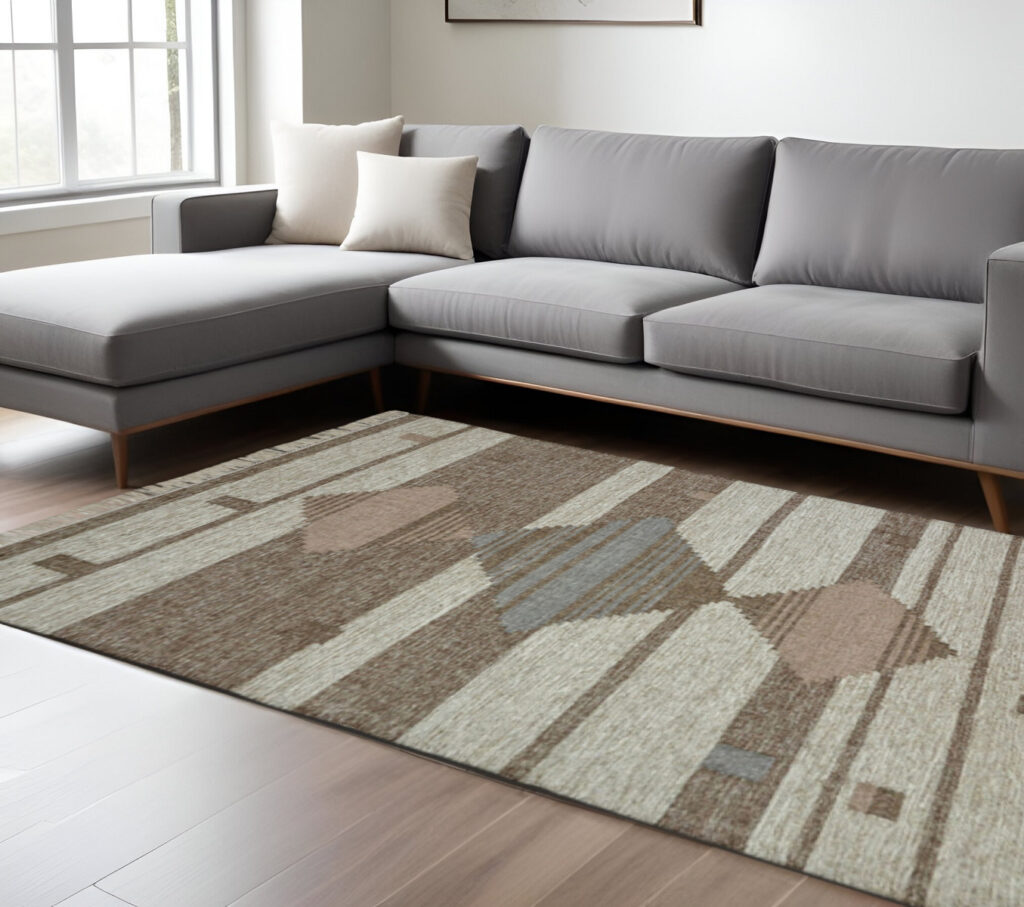
The 8×10 brown and beige jute striped flatweave above is listed as jute and as a handmade flatweave, with a 5×8 size in the same family. The sage 8×10 jute flatweave is another handmade jute example from the wider handmade assortment, also listed as jute. Jute is a natural plant fiber. It has a matte, textural look that suits casual indoor rooms. It is not the first choice for a damp room or a fully exposed patio, because plant fibers absorb moisture. For outdoor floors, use outdoor rugs and the outdoor rug materials guide instead.
A jute flatweave is a good candidate when you want a handmade, low-pile indoor rug, you like a natural texture, and you are willing to keep it dry and to use a pad on a hard floor. It will not feel like a thick wool pile, and that is the point of a flatweave.
Handmade Wool and Cotton Flatweaves
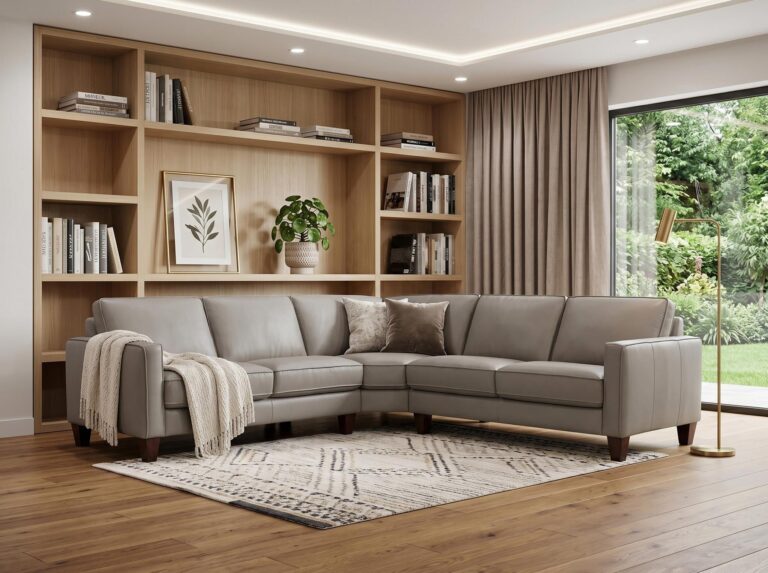
The 8×10 gray and brown geometric flatweave above is listed as a handmade area rug in wool and cotton, with a 5×8 size in the same pattern. This is still a flatweave — a low, woven surface rather than a knotted pile — but the fiber is wool and cotton, not jute. Wool has a different hand and a different care path from jute. It is still an indoor fiber in this context, and it is still not a hand-knotted pile rug. If you want a knotted wool pile, go to hand-knotted rugs and the hand-knotted wool buyer’s guide.
Choose a wool-and-cotton flatweave when you want a handmade low-pile rug with a wool content listed on the page, and you prefer that fiber to jute. Compare the photos of the face and, if they are shown, the back, and use a pad on hard floors.
Kilim-Pattern Rugs in PET and Polypropylene
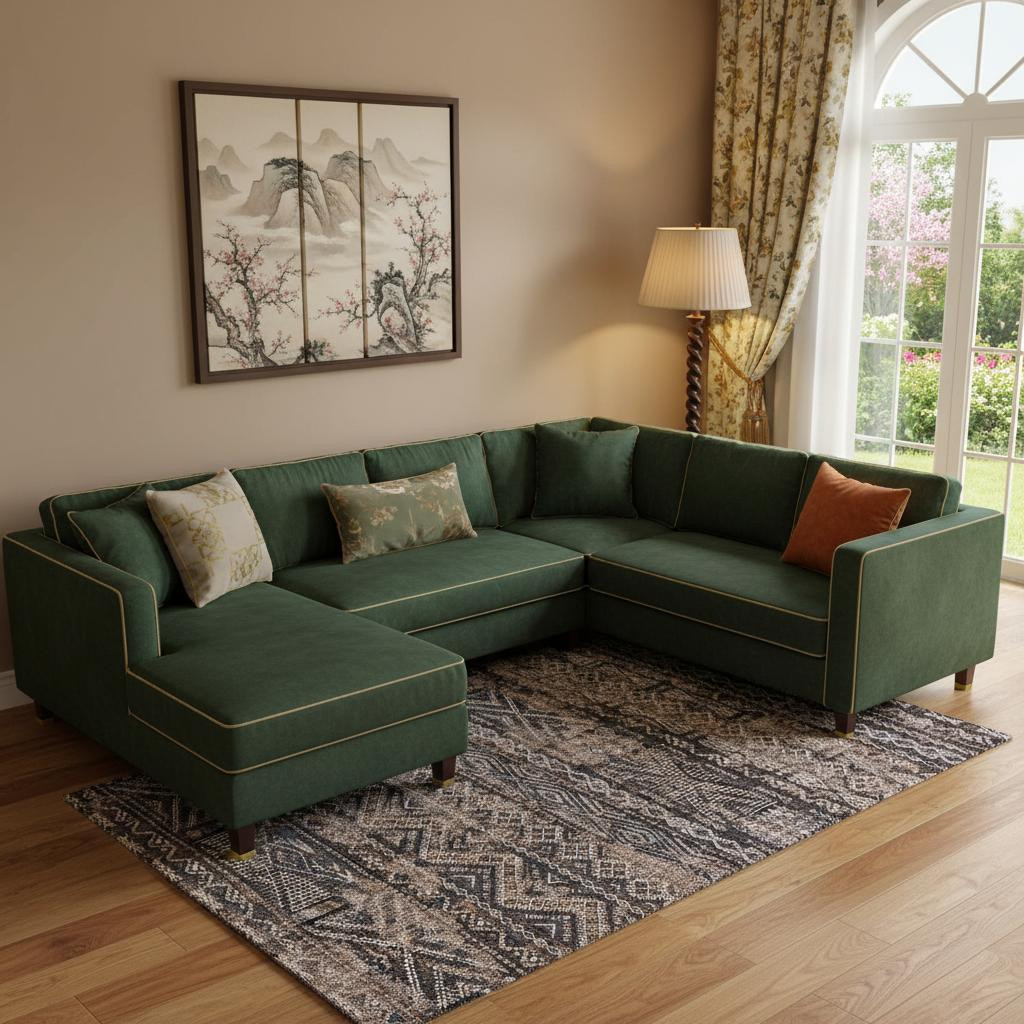
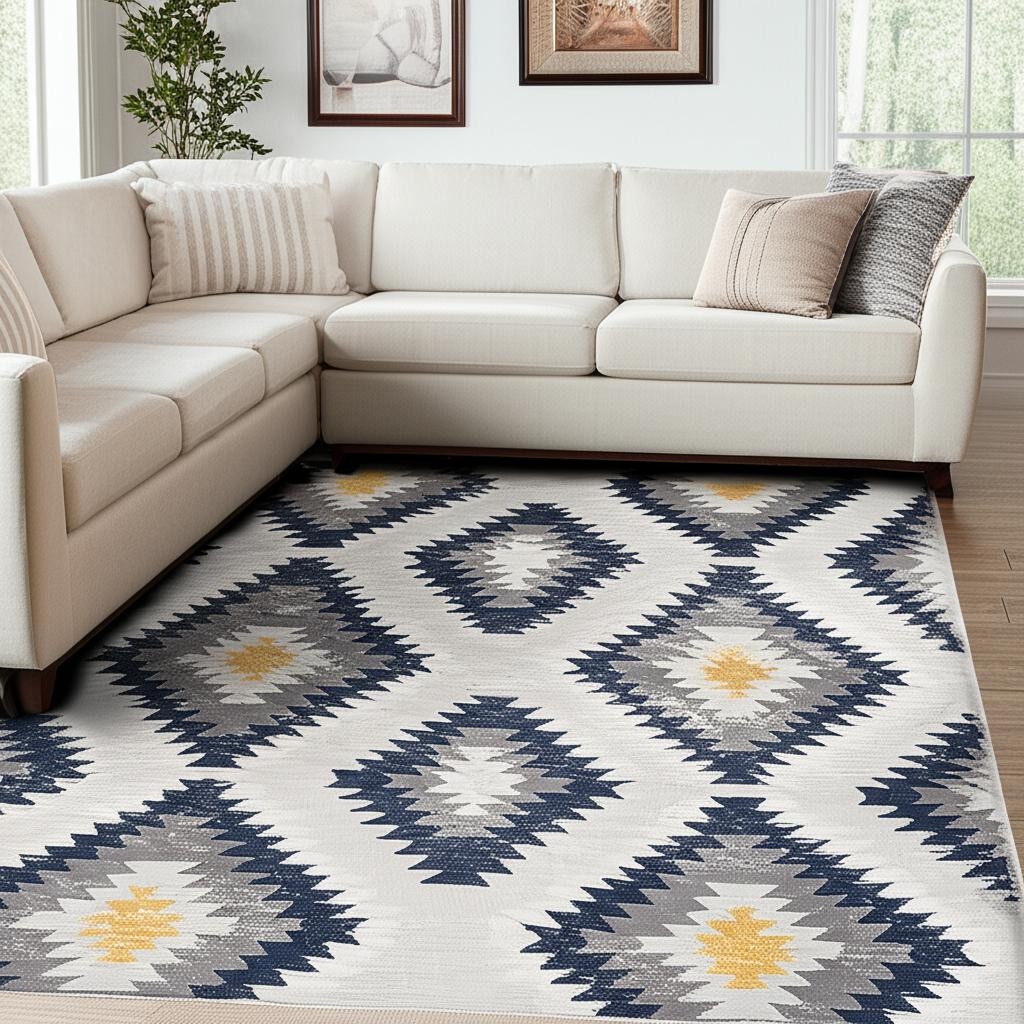
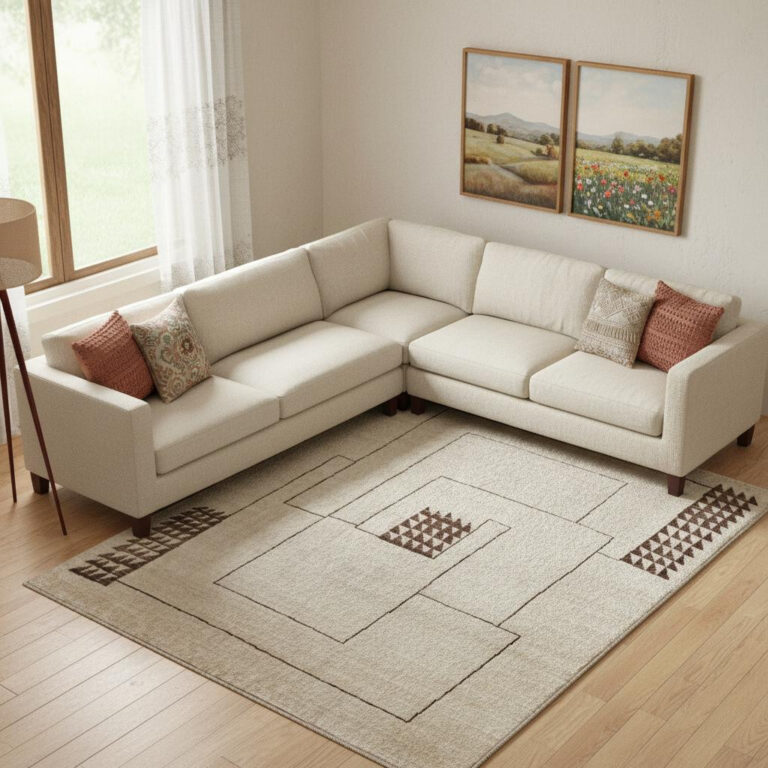
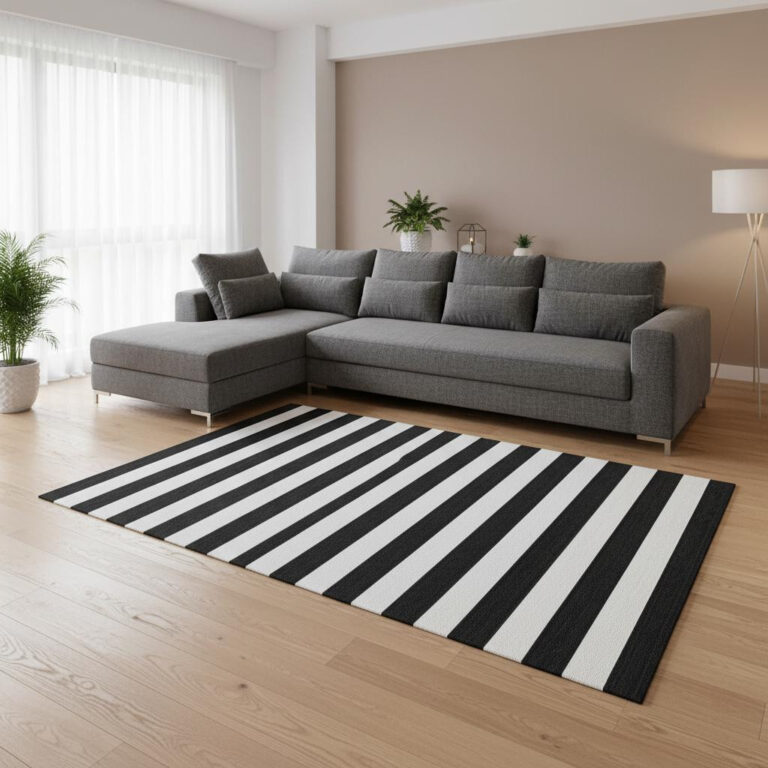
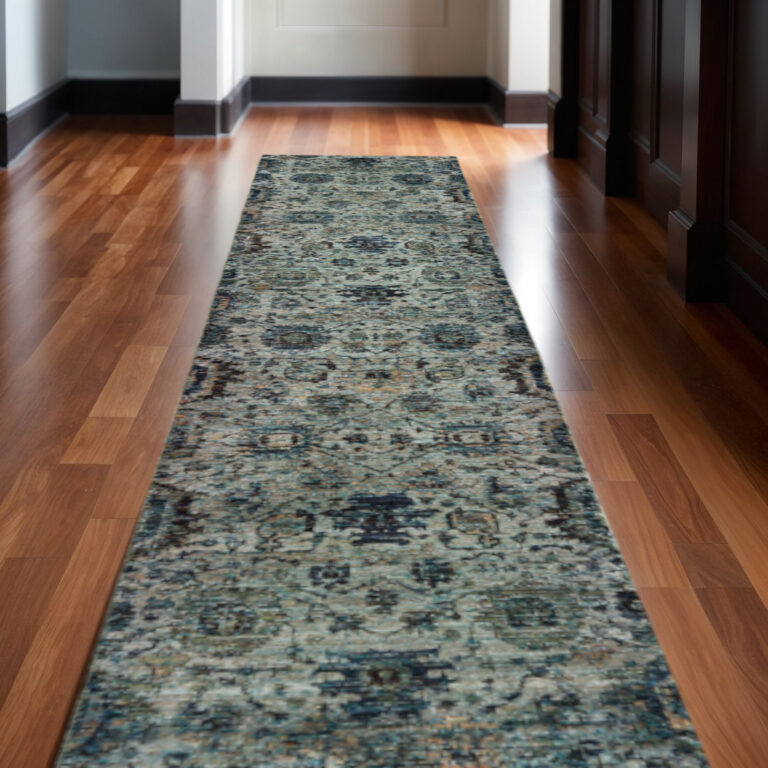
The 8×11 gray and beige oriental kilim-style rug is listed as 100% PET, washable, with a non-slip rubber backing. The 8×10 blue ikat kilim-style rug is listed as polypropylene, with related 5×7, 6×9 and 9×13 sizes in that pattern family. These are kilim-look or kilim-pattern rugs in synthetic fibers. They can be practical when you want a flatter, patterned rug that is easier to clean than a natural-fiber handmade flatweave. They should not be described as handmade jute or as hand-knotted wool, and the PET example should be understood as a washable, rubber-backed piece, not as a traditional tapestry-woven kilim.
Polypropylene also appears often in indoor power-loomed and outdoor rugs elsewhere on the site. A kilim-pattern polypropylene rug in this collection is still, first, a polypropylene rug. If the room is a covered or open patio, confirm that the specific product is listed for outdoor use; do not assume that every synthetic kilim-look rug is an outdoor rug.
Comparison Table
| Example | How it is listed | Best used as |
|---|---|---|
| 8×10 brown and beige jute striped flatweave | Handmade flatweave, jute | An indoor, textural, low-pile handmade rug. Keep it dry. |
| 8×10 sage jute flatweave | Handmade flatweave, jute | A solid-color indoor jute flatweave in the same fiber family. |
| 8×10 gray and brown geometric flatweave | Handmade flatweave, wool and cotton | An indoor handmade low-pile rug with wool content listed. |
| 8×11 gray and beige oriental kilim-style rug | 100% PET, washable, rubber backing | A kilim-look synthetic rug for easier cleanup, not a handmade jute or wool kilim. |
| 8×10 blue ikat kilim-style rug | Polypropylene | A kilim-pattern synthetic rug. Confirm indoor or outdoor use on the page. |
Size, Rooms and What Not to Do
Size a flatweave with the same front-legs-on or all-legs-on rules as any other living-room rug. An 8×10 is a common starting size; a 5×8 is a smaller option; larger kilim-pattern sizes such as 8×11 and 9×13 exist in this collection as well. See what size rug for a living room. Because the pile is low, a flatweave is often easier under a dining chair or a door, but you should still leave a border of floor around the rug and use a pad on hard floors so it does not creep.
Do not use a jute or wool-and-cotton handmade flatweave as a patio rug. Do not treat a PET or polypropylene kilim-look rug as a handmade wool kilim just because the title uses the word kilim. And do not assume this collection replaces hand-knotted rugs when you specifically want a knotted wool pile.
How to Tell Them Apart in Photos
Handmade jute flatweaves usually show a visible woven structure and a natural, slightly irregular texture in close photos. The striped and solid jute examples in this collection look like floor textiles with a matte plant-fiber surface, not a printed pattern sitting on a rubber sheet. The wool-and-cotton geometric flatweave should be read as a woven pattern in wool and cotton, again with a low face. On the PET kilim-style rug, the listing itself points you to a washable piece with a non-slip rubber backing that covers the back to finish the look and help the rug stay in place — that backing is a machine-made, applied construction, not the exposed tapestry reverse of a traditional handmade kilim. The polypropylene ikat kilim-style rugs should be compared as even, patterned low-pile synthetics. If a close photo of the back is not shown, do not assume a traditional kilim back; ask us to confirm what is listed.
Thickness can also be a clue, with caution. The jute flatweaves in this collection are listed around 0.2 inches thick, which is in a typical low-pile range. If a listed thickness looks extreme relative to the photo, treat it as a number to confirm on your quote rather than as a reason to reclassify the rug yourself.
Care
- Follow the care notes on the product page. A washable PET rug is not cleaned the same way as a jute flatweave.
- Vacuum a flatweave with the beater bar off or on a gentle setting, especially on jute or wool.
- Blot spills; do not soak jute.
- Use a pad sized to the rug on hard floors.
- Rotate the rug from time to time so sun and traffic wear it more evenly.
Shop Flatweave and Kilim Rugs at Vaeny
- Flatweave and kilim rugs
- Handmade rugs
- Hand-knotted rugs
- Area rugs for a wider indoor size mix
Every Vaeny order begins with a personal written quote, with free shipping to the contiguous US. Include the room size and whether you want a handmade natural-fiber flatweave or a kilim-pattern synthetic. Email cs@vaeny.com or send us a WhatsApp text if you want help reading two labels side by side.
Frequently Asked Questions
Is a kilim the same as a flatweave?
A kilim is a type of flatweave in the traditional sense. In this collection, some rugs are listed as handmade flatweaves in jute or wool and cotton, and some are kilim-pattern rugs listed as PET or polypropylene. Read the material line rather than the word “kilim” alone.
Are the flatweave and kilim rugs all handmade?
No. The category sits under handmade rugs and includes handmade jute and wool-and-cotton flatweaves, but it also includes kilim-pattern rugs listed as PET or polypropylene. The product page is the source of truth.
Can I put a jute flatweave on a patio?
Jute is a natural indoor fiber and is a poor match for a damp or fully exposed patio. Use the outdoor rugs collection for those floors.
What size flatweave should I get for a living room?
Use the same living-room rules as for other rugs: an 8×10 is a common start, a 5×8 is smaller, and larger sizes exist in some patterns. The living-room rug size guide has the front-legs-on and all-legs-on layouts.
How is a flatweave different from a hand-knotted rug?
A flatweave has little or no pile. A hand-knotted rug is built from knots and usually has a pile you can feel. They are different constructions and are sold in different collections, with a separate buyer’s guide for hand-knotted wool.